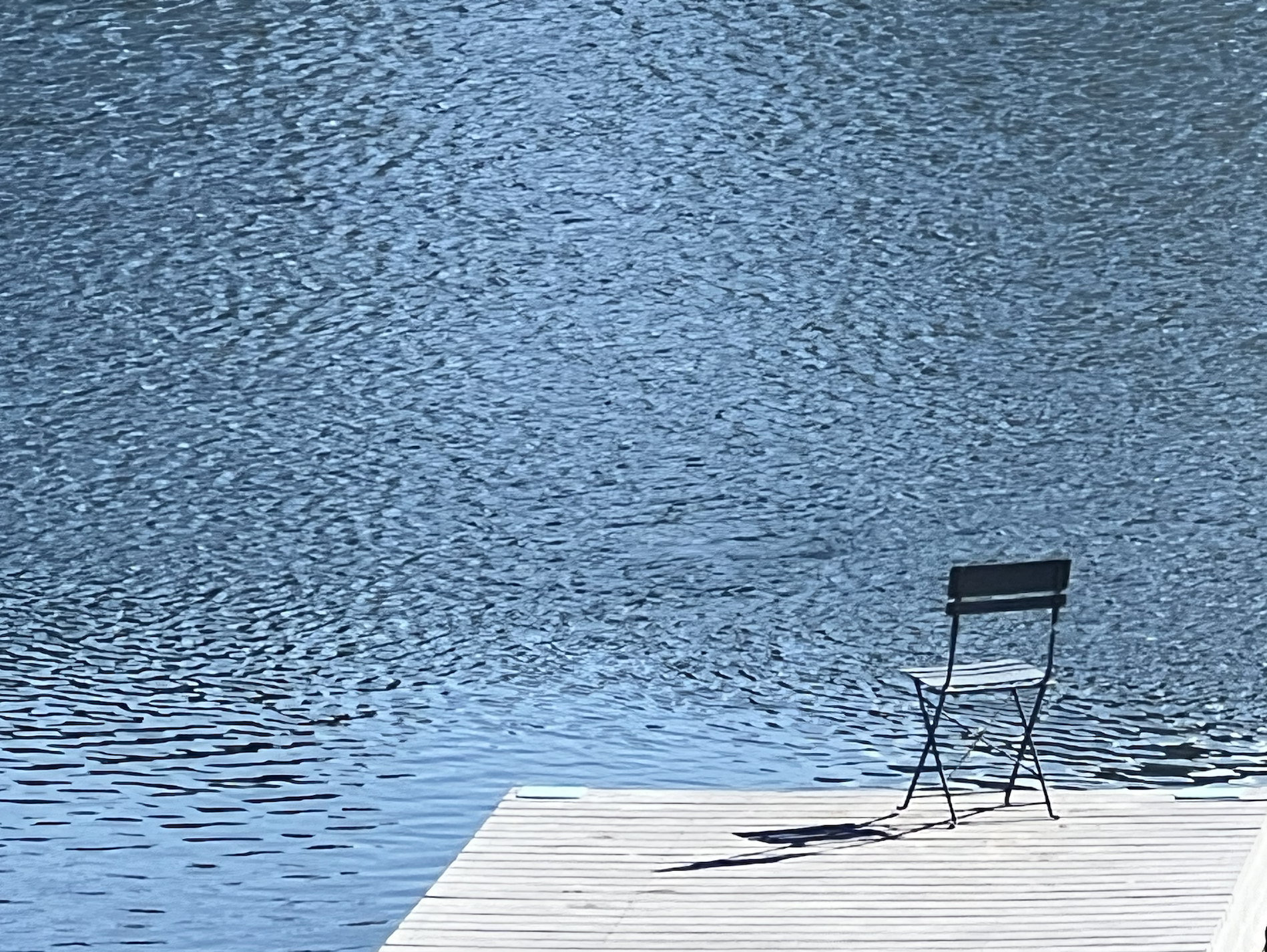

What is home?
This has been an important inquiry in my life, and at many levels. The home of my childhood in Edmonton, Alberta. The home of early married and parenting life in Orem, Utah. The home of a regular summer family vacation cabin in Fairmont, British Columbia.
Home continues to evolve for me. I currently call Lindon, Utah home. It is where my kids are. It is where I take care of my dog. It is where I grow tomatoes. It is where I walk and jog near horse fields. I also call Seattle, Washington home. It is where my wife lives often. Where her children, my friends live. It too is a place where we grow things (lettuce much better than tomatoes) and walk dogs.
I am learning to welcome the home that is beyond geography. The easy home of being in company with friends. The easy home of accepting a man’s offer of sharing his potato chips as we sat a lunch bar today. The home that comes with saying yes, and welcoming the person in front of me as friend. Accepting invitations, sometimes just because they are offered. Offering some of my own because it’s a bloodline to creating community and kind association.
This current round of reflection about home is inspired by my recent stay in Edmonton, Alberta, the city in which I was born nearly 50 years ago. My wife Teresa and I visited this week. We stayed with my parents. 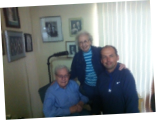 We visited my Grandparents in Sherwood Park, my other Grandfather at a nearby assisted care center. Teresa and I wanted to be deliberate about celebrating our recent marriage union with this group of Edmonton aunts, uncles, cousins, siblings, nieces, nephews, parents, grandparents. These are people that I grew up with.
 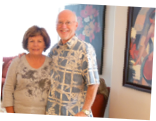 People that supported me both in times of need and joy. Sometimes with my awareness. Sometimes without it. They are people with whom I’ve had 25 years of picnics, birthday parties, Christmas celebrations, Thanksgiving ping pong tournaments, tree planting projects, re-shingling roofs, and other work projects. We’ve cheered each other on in sports, dance. In life. Edmonton. Home.
This was the first time for me to be in Edmonton when my parents were not living in the house in which I grew up. That home in Ottewell, of 47 years for my Mom, is no longer where they live. They moved to a condo further in the south and west of Edmonton. I wondered what it would feel like this time. How it might feel different. Would it feel like a loss? It felt like home. Beautiful. Cared for. A place to sleep. To eat good food. To watch a CFL football game. To interact. To be together. To listen to one another. To laugh. To glisten with tears.
It is easy to say that home is when you are with people you love and that love you. I relate to this. And though my earlier conceptions of this would have been more oriented to immediate family, I have come to welcome this spirit with old friends, new friends, and people that I meet. On a more general level, I’m learning that “people find what they look for.” When I look for kindness, I find it. It doesn’t remove sadness, for example. But it highlights kindness. When I look for home, when I hold the energy of invitation to be home, when I welcome it with others, I find it.
These are musings. Important as a general category to me. And for others that share the interest of what home is to them. Indeed. What follows are a few of the specific images and appreciations I carry from this trip to Edmonton (my last was 16 months ago) and that inspired these reflections from my tender, yet curious heart.
-Being picked up by my parents at the Edmonton International Airport at 12:05 am. The kindness of receiving. Then joyfully visiting later into the early morning.
-Being welcomed into “make yourself at home.” The way it has always been for me. No need to ask special permissions. Good to be involved in cleaning up the dishes together, that welcomes an easy pace of sharing together.
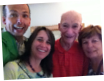 -Visiting my Grandpa, Ken Ross, now 82, my father’s stepfather. It’s been three or four years since seeing him in person. He’s older, yup. A bit slower, and assisted by using a walker. And has a delightful sense of humor and teasing. I’ve always known him this way. He brought humor always.
-Checking in with my Grandparents, Fern and Billie Gould, now 91 and 95 respectively.  Living in their home that we’ve always referenced as “The Ponderosa.” Grandpa too has a walker that he references playfully as his “horse.” He grabs the “horns” (yes, it is a mixed metaphor) and slowly, yet with awareness moves himself about the house. Grandma cares for him with love, durability, thoughtfulness. Grandma remains an avid sports enthusiast. Ask her about the Oilers, the Eskimos, the Ryder Cup and she has keen insights — she’s always had the ability to coach.
-Celebrating our m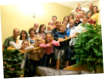 arriage by having my parents invite all of the family that grows from the Gould side, Cindy & Wilf from the Ross side, and my Auntie Donna for cake, fruit, wine, cheese. Teresa and I showed several slides from our ceremony. I felt a bit choked up as I offered a few word that night, recognizing that though it has been 26 years since I lived in Edmonton, this group of people have never left my heart.
-Dinner with my sister, Wendy and her family. Peter. my brother inlaw. My 19 year old nephew Michael and 14 year old niece Erika. Schnitzels, a Vidlak specialty. The aliveness of Michael and Erika as they navigate and explore university life, volleyball tournaments and more. (It’s worth noting as an aside that at this point of our stay, this home, I’m missing my kids, wishing they could see this side of family also. A very loving. Very touching. Very close-knitted family.)
-There were more family gatherings. Each that I wanted to do. Golfing with my Grandma Gould. She hits the ball 125 yards every time. She drained two putts of 30 and 15 feet. Watching my Mom curl. Taking Friday night pizza to my grandparents and watching some of the Eskimos football game. A brother / sister walk with Wendy. Horse-races with a group of ten of us (Grandma had the most winners).
-There was meeting with the family that is colleagues. Inviting coffee with Beth Sanders, 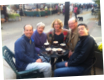 Marg Sanders, Hugh Sanders, Lona Leiren. Meeting in downtown Edmonton, sitting outside Credo’s while the bustle of farmers market swirled around us. They were freshly returned from a Circle Practicum with PeerSpirit. Sharing stories with them, creating and welcoming a time to loop our lives together — that was a highlight of my day. That’s home too!
-There was visiting my Dad and Grandmother’s grave site. Quiet reflection. Appreciation. The invitation of connecting in spirit. Home.
-There were my refl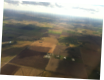 ections leaving. The touching familiarity of what I saw from the plane, wheat fields squared away in the Alberta prairies landscape. The way that I wanted to just breath in that emotion, the overall image as a symbol of what I have called home for so long, and was now felts so gratefully fille
 d with. As the flight progressed over the Rockies, my excitement of evergreens, mountains, and lakes that I saw arriving into Seattle. My anticipation of seeing Teresa, Patrick and Kate.
Home. Home. Home. Home.
I feel the tugs in my heart that take me back to Edmonton and all of those lovely people. The part of me that appreciates being filled and loved in that focused way. It is real. It is beautiful.
I also feel the deep pull that takes me forward. The home of my children. The home that is the life of Teresa and I. The home that is uncharted waters. The home that is partnership of the unknowns of life. The home of the fire that burns beside me now as I write this from our Seattle kitchen. The home of a cozy robe that I wear now, happy with the way it feels on my skin and helps me feel my place in Seattle, even when it is a short two day stopover.
I relate to people who reference a broader global home. These are the kinds of friends I make and people that I work with all of the time (prior to Edmonton, Teresa and I had worked with BALLE, a network of people oriented that way).
Maybe home is defined by familiarity.
If so, it is my experience that I have learned particularly in the last 10 years, that familiarity expands when I welcome it. When I live with a spirit of appreciation and gratitude, home expands.
Whatever that is, and however it evolves, I feel very well fed by the people that I originally began the journey with, and by the geography of Edmonton that marked a starting point. The kind of feeding that leaves me with a whisper on my lips of appreciation — wow.
 to do what they are doing and a bit more. Yet, their vision is appropriately massive: “Within a generation, we envision a global system of human-scale, interconnected local economies that function in harmony with local ecosystems to meet the basic needs of all people, support just and democratic societies, and foster joyful community life.”
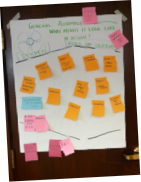
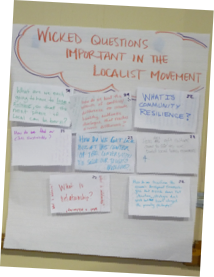 What are we each going to have to lose or release so that the next phase of local can be born?
 Assembly for their order, the
  courage a thoughtfulness of continuous learning and engagement with one another.
 sharing comes from our teachers,

