
Learning With Community Organizers

Some of the people that have really influenced my learning on working with groups are Community Organizers. This is work that is about justice. About equity. Inclusion. Diversity. Power. Systemic things. These are people that are committed to pressing and important causes and initiatives. At the heart of it, community organizers are calling people to be in truth-telling together. Conceptually, and in the heart, and with boots taking steps on the ground.

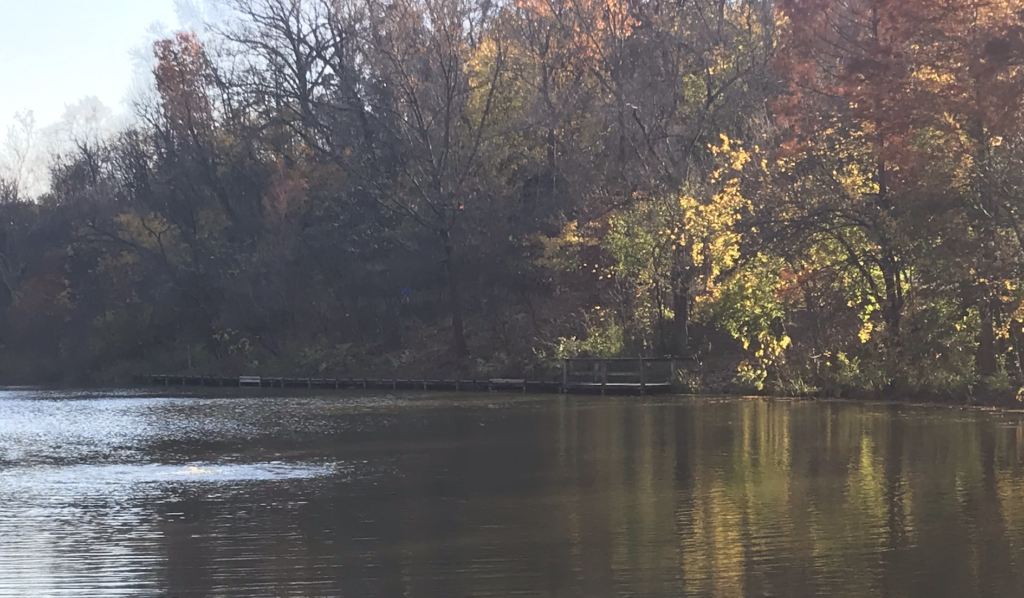
Recently I was in a conversation with some of these organizers that I’m most closely connected to and that I most admire. It was a reflective conversation, that had me feeling a still quality, like that of this calm lake. We spoke to a simple question — what is some of your key learning about contributing health and well-being to community organizers? Below are a few highlights from what they shared. Next to each, I’ve added short reflection on a value that goes with such learning.

  • Sometimes the conversation that we thought we were going to have, or supposed to have, is not the conversation we needed. — This is true everywhere, right. Ability to get started, and then pivot with what arises, is part of the gift that we can offer with each other in groups and teams. To help each other find our way deeper to purpose.
  • Make learning as personal as possible. — This learning is an interruption to the patterns of meeting that falsely decouple what is professional and what is personal. It points us to welcoming the personal, insisting upon more integration rather than more separation. For those of us trying to get “others” in the room, showing up with more presence, our first job is to get ourselves in the room.
  • We have to be willing to face our tensions, and follow them through to the gifts that they uniquely have to offer. — Yes, which I would suggest includes wisdom to know that though tensions may not be resolved, willingness to explore and learn from them matter.
  • When clear on what we can’t hold, we get clear on what we can hold. — Clarity will always matter. Honesty will always matter. Removing ourselves from imposed narratives of “can’t = failure” matters. Rather, I would suggest we are all doing our best to contribute. Humility from the “can’t” gives us power in the “can.”
  • If you think the work is only healing “out there,” and not “in here,” you’re really wrong. — So many organizing institutions have focused mass energy on what is out there, neglecting the inner world of people involved in the good work. Are there times when the boots on ground work overwhelms? Of course. We do our best. Yet, as pattern, if we hide our inner work, supplanting it with outer work, eventually we reach dead end roads. The inner work that includes self care, reflective practice, gives us more through-roads to continue the journey with wholeness and healing commitment.

It is powerful to me to see such a competent and powerful group of people affirming the essentialness of inner work that helps sustain the outer work. It is powerful to see any of us in learning that grows capacity to connect the longer arc of things with the present moment, with the 15 minutes that are in front of us. It is powerful to witness smart and intelligent leaders stand for not just doing, but for the wellness that is being.

With gratitude to Darsheel, Stu, Bianca, Prentiss, Quanita.
Yes, Attention

The best of a world that incessantly seeks our attention, and that has the ability to reach us, be that through devices or direct contact, is connection. It is community. It is learning. It is kindness. It is wondrous experimentation. It is compelling emergence. It is new configurations. It is magic.

The worst of a world that incessantly seeks our attention, and that has similar ability, is noise. It is clutter. It is competition. It is relentless marketing, be that of a product, idea, or narrow ideology. It is imposed distraction. It is squeaky wheel. It is whining. It is fear.

I continue to learn that in such an impressive interconnected world, seeking our attention, it is vitally important to remember practices of stillness and silence. I continue to learn that it matters that any of us cultivate inner abilities, not just outer abilities. Clarity, not just tenacity. Stillness, not just movement. Being, not just doing. So that we can add some deliberateness, not just default, to how we offer our gifts into flow of life.

For me it means simple things that I sometimes forget. A walk mixed in to an unaccomplished todo list that overflows the day. Five – twenty minutes of breathing to start the day, and to add to the middle of the day if needed. Private journaling to have opportunity for unrefined expression. Writing dreams to feed voice of the subconscious.

From Gunilla Norris, who remains to me one of my most important teachers that I’ve never met in person:

Study the way waves wash onto the shore,
or the way rings float out on a lake
when a pebble splashes through the surface,
moving without apparent effort. There is
an organic pace to this. We, too, have an organic pace.
Silence can help us feel it.

In our culture we do not trust time.
We try to defy time. We steal time. We kill time.
We want to control the flow of events,
instead of trusting in a natural progression —
instead of trusting that we can and will
meet life as it happens.

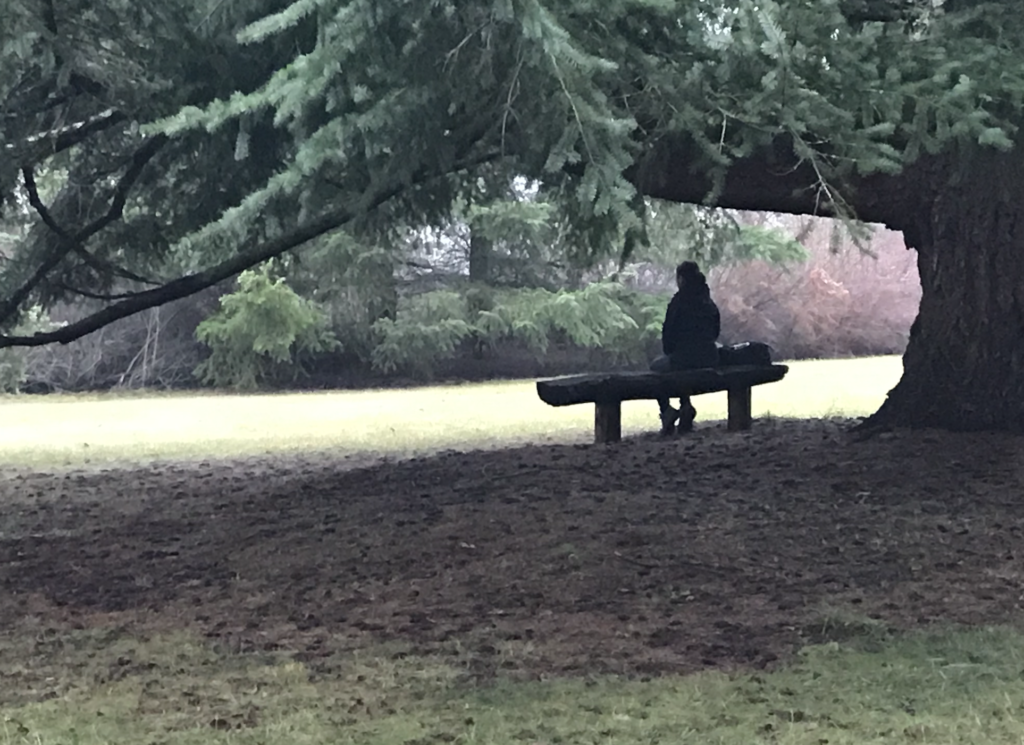
Here’s to attention, in the best of ways, including high regard for the moments when all we do is sit on bench, welcoming the silence to sit next to us.

From Rilke, A Short Story

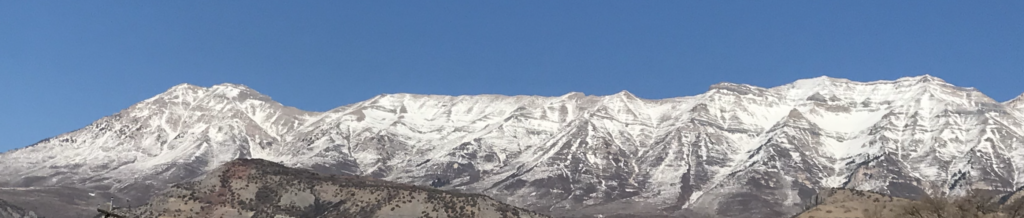
The skyline above is from where I live in Utah Valley, taken as photo earlier this week. I’ve come to love this skyline, these Wasatch Mountains, for the way that they hold the eastern edge of valley, over which sun rises. And for the way that they take me away to a certain kind of aspiration and wonder in their 12,000 ft grandeur.

I suppose that this poem below by the Austrian, Raine Maria Rilke, is about departures. And searches. And courage. And surrender. And wonder. And holding. And…. Therein lays some of the beauty of Rilke, taking us with just a few words to the places we yearn for. And sometimes, the places we avoid.

For reflection.

Sometimes a man stands up during supper
and walks outdoors, and keeps on walking,
because of a church that a stands somewhere in the East.

And his children say blessings on him as if he were dead.

And another man, who remains inside his own house,
dies there, inside the dishes and in the glasses,
so that this children have to go far out into the world
toward that same church, which he forgot.

Gifts of Circle - Question Cardsasd
Gifts of Circle is 30 short essays divided into 4 sections: 1) Circle's Bigger Purpose, 2) Circle's Practice, 3) Circle's First Requirements, and 4) Circle's Possibility for Men. From the Introduction: "Circle is what I turn to in the most comprehensive stories I know -- the stories of human beings trying to be kind and aware together, trying to make a difference in varied causes for which we need to go well together. Circle is also what I turn to in the most immediate needs that live right in front of me and in front of most of us -- sharing dreams and difficulties, exploring conflicts and coherences. Circle is what I turn to. Circle is what turns us to each other."

Question Cards is an accompanying tool to Gifts of Circle. Each card (34) offers a quote from the corresponding chapter in the book, followed by sample questions to grow your Circle hosting skills and to create connection, courage, and compassionate action among groups you host in Circle.

This will close in 60 seconds

asd
In My Nature
is a collection of 10 poems. From A Note of Beginning: "This collection of poems arises from the many conversations I've been having about nature. Nature as guide. Nature as wild. Nature as organized. I remain a human being that so appreciates a curious nature in people. That so appreciates questions that pick fruit from inner being, that gather insights and intuitions to a basket, and then brings the to table to be enjoyed and shared over the next week."

This set of Note Cards (8 cards + envelopes)  quotes a few favorite passages from poems in In My Nature. I offer them as inspiration. And leave room for you to write personal notes.

This will close in 60 seconds

asd
Most Mornings is a collection of 37 poems. I loved writing them. From the introduction: "This collection of poems comes from some of my sense-making that so often happens in the morning, nurtured by overnight sleep. The poems sample practices. They sample learnings. They sample insights and discoveries. They sample dilemmas and concerns."

This set of Note Cards (8 cards + envelopes)  quotes a few favorite passages from poems in Most Mornings. I offer them as inspiration. And leave room for you to write personal notes.

This will close in 60 seconds