Tensions of Awakening

Yup, more from Mark Nepo. Well, actually Henri Nouwen, a Dutch priest and writer, who eventually lived in Canada, quoted in Nepo’s book, Facing the Lion, Being The Lion.

“To live a spiritual life we must first find the courage to enter into the desert of our loneliness and to change it by gentle and persistent efforts into a garden of solitude. This requires not only courage, but also a strong faith.”

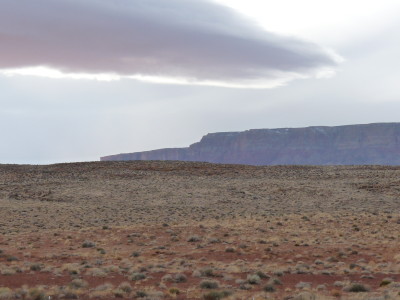
P1050468

It takes strong faith these days, doesn’t it. What, with the everyday reporting of massacres. Or environmental extremities. Or economic systems failing not just individuals but nations. Or the senseless death of loved ones. For some, our faith is in our religious communities. For some, in our families. For some, in the depths of the loneliness that Nouwen writes, from which can come oh, so subtly, purpose, and essential refining of soul, and quintessential letting go, and, ironically, belonging. From the void, from the seeming barrenness, some of us hold to a faith that there is irrepressible life (and have friends to remind us when we can’t see it anymore).

I like happy endings. Of course. Yet, I have learned that happy comes in many forms — sometimes from the deep honesty in sorrow. And that endings are rarely endings — little is so clean. Some stories transpire over a decade, or a lifetime. Some stories stretch the limits of our ability to remember that gardens do exist. My 19 year-old son reminds me — “most of it is about learning and growing; not forcing.” That’s a different kind of happy and a different category of ending.

So lays these tensions that most of us live. Some very personally. Some very globally. Good to be aware of as we walk, and die, on these many paths of humaning.

Heart-On Engagement

I love these two passages from Mark Nepo, American poet and philosopher, from his book Facing the Lion, Being the Lion: Finding Inner Courage Where it Lives.

“…head-on engagement and heart-on engagement with the mysteries of life hone us to what is essential. It is our courageous engagement that wears away whatever is extraneous.”

“…a life well lived can be understood as one that risks not being trapped or governed by fears, one that follows the pulse of what matters as it presents itself. This is not to say that we will ever be free of fear, but that, in spite of our fear, we can be drawn by what matters down the unplanned path of time, where we are often called to choose what is actually there over what we thought we’d find.”

Heart-on has always been more compelling to me. It requires an honesty, and friends to help mature us along the way, doesn’t it.

It’s About Time

I think about time a lot. The time that I have meetings during the day. The 10 minutes of time that I have before some of those meetings. The time that I take after those meetings to follow up. The time that I have to get more done than there is seemingly time for. The time that I want to walk my dog, or be in my garden. There always seems to be some part of my brain that is chunking out time.

I’d like to think about time less. I’d like to feel less “driven” by the clocks on my computer, my stove, my microwave oven, my phone. I’d like to feel more spacious. Less pressured. I’d like to feel less rushed — a quality that can often become habit when thinking so much about time. Time seems to be in the middle of all of this.

For much of 2015 I got to be an official mentor with my friend Jessica Riehl, completing her thesis for her graduate program. Her final project was a focus on time that started with recognition of the pattern that many people experience — not having enough time and how to adapt to that. Though efficiency with time interests me, what feels more powerful and intriguing to me is becoming more aware of the relationship with time that any of us have. With awareness comes choice — so the thinking goes. With choice comes different behavior and practice.

Jessica and I created an exercise that included some fill-in-the-blank statements using post-it notes, one for each person for each question.

  1. Time is a _____. Or, Time is _____.
  2. The hardest thing about time is _____.
  3. The easiest thing about time is _____.
  4. The reason I don’t have time to _____ (something you like to do) is because _____.
  5. If I could change one thing about time it would be _____.

Then we had people talk about their responses. It was revealing. It was really interesting. For me, because our respective relationships (thinking, beliefs, practices) with time really impact who we are and what we are as human beings. Individually and collectively. If I feel that I’m always “short on time” I build my life around that. A timeless wandering walk that could be the afternoon becomes 20 minutes to the end of the block and back.

Fast forward from that time with Jessica. Earlier this week I was in a conversation with another good friend and colleague, Tatiana Glad, visiting from Amsterdam. I love Tatiana for her incredibly quick brain and big heart. Over breakfast, I asked Tatiana about her practice with simple things like email and texts. “If someone texts you, by when do you feel you are responding late?” Of course it depends on who is texting and what the topic is. But what I was trying to surface with her, and learn from, was more of the nuancing of relationship with time. For me, texts are more immediate. I feel that I want to respond within the hour. However, with email, unless urgent (again by project or person), I typically will respond within a couple of days. I don’t want to treat the randomness of email as being my priority todo list — that never ends and often can displace all of the available space for my creative project work.

It was a fun conversation with reaching implication about a simple, simple thing. Yes, corny as it sounds, it’s about time that more of us start talking about time and our relationship to it. To remember the ways that this human construct, clock time, has come to shape our very conception of reality, often, without much of our awareness.

It’s about time.


An Increasingly Divisive Time

Recently I received an email from the Center for Council, one of the groups that offers a form of circle as core modality for reclaiming who we are as human beings (or evolving the edge of how we are as human beings in this time).

It referenced an “increasingly divisive time,” “nasty rhetoric that is common place in politics,” “contentious chatter in social media,” “growing orientation to us versus them,” and “putting up walls rather than coming together.”

This is a contemporary narrative that feels very familiar and accurate and needed. By narrative, I don’t mean a story to place on a bookshelf when tired of reading it. By narrative, I do mean a perceptive lens that shapes not only what we see, but what is seeable.

I appreciate the Center for Council’s invitation and their modality. For me, I work and practice through The Circle Way because of all that is named above. It’s the rubber-hits-the-road methodology that I teach and live as a way of being that makes the most sense to me. It creates the most change. At one layer, it is as simple as “let’s talk.” At another layer, “let’s listen.” At another, “let’s get real.”

All of these are good things. And needed. I’m an advocate. Dialogue will always matter. Understanding will always matter.

However, since beginning to write this post, I’ve watched videos and programs about the two most recent killings of black people by police officers in the United States this week.

I can feel a kind of hurt in me as I watch Diamond Reynolds describe the shooting of her fiancé, Philando Castile in Falcon Heights, Minnesota. I can hear the fear and panic from the police officer who remains with gun pointed in to car, having already fired it four times, while Diamond Reynolds, complies with requests to keep her hands where they are, yet remains filming and documenting.

I can feel my anger as I watch the wife of Alton Sterling describe the circumstances of his death. I can feel my confusion grow as I hear that he was shot three times in the chest while already subdued. I can feel my tears rise as I watch Alton Sterling’s teenaged son, break down in tears at the press conference. I can feel my frustration. Why? Why is this such a common story? Its never far from me — what if that were my boy, who is black, and mostly oblivious to these dangers as he lives his 11 year-old life? What if he were stopped later in life? What if he were misunderstood? And killed after being seen as a threat in a moment of fear by a scared officer with power?

No, I don’t believe it is easy at all to be a police officer. No, I don’t relate to that kind of stress and what are likely many stories of what was happening inside these officers in the real-time assessment and reaction of the moment. I can understand. I can tell myself to be patient. But I hear my friend Quanita’s voice speaking to me, “and people are still dying.”

I don’t get it. The part of me that has to imagine many choices of power that can be used that are not fatal. I don’t get it that trained officers wouldn’t be able to use guns to shoot other than in the chest and heart. If necessary, why not a leg? Get way from guns, why not a taser? Why not pepper spray? Surely there must be strengths that are debilitating enough to not kill yet provide more resolutions to a situation. Why is it that a gun shot to the chest is what we are seeing so often from what are skilled and trained professionals?

To be fair, I suppose there are many instances where this is the case. Cops do their job. It doesn’t go reported. That’s comforting.

“And people are still dying.” Philando Castile. Alton Sterling. Dontre Hamilton (whose mother I met in person a couple of months ago), Eric Garner, Michael Brown, Tamir Rice, Walter Scott, Freddie Gray. Fuck!

And people are dying.

This has to change.

And people are dying.

Training has to change.

And people are dying.

Increasingly divisive.

And people are dying.

All lives matter.

I remind myself to breath, and return to talking, and listening. It better be real.

And people are dying.
Gifts of Circle - Question Cardsasd
Gifts of Circle is 30 short essays divided into 4 sections: 1) Circle's Bigger Purpose, 2) Circle's Practice, 3) Circle's First Requirements, and 4) Circle's Possibility for Men. From the Introduction: "Circle is what I turn to in the most comprehensive stories I know -- the stories of human beings trying to be kind and aware together, trying to make a difference in varied causes for which we need to go well together. Circle is also what I turn to in the most immediate needs that live right in front of me and in front of most of us -- sharing dreams and difficulties, exploring conflicts and coherences. Circle is what I turn to. Circle is what turns us to each other."

Question Cards is an accompanying tool to Gifts of Circle. Each card (34) offers a quote from the corresponding chapter in the book, followed by sample questions to grow your Circle hosting skills and to create connection, courage, and compassionate action among groups you host in Circle.

This will close in 60 seconds

asd
In My Nature
is a collection of 10 poems. From A Note of Beginning: "This collection of poems arises from the many conversations I've been having about nature. Nature as guide. Nature as wild. Nature as organized. I remain a human being that so appreciates a curious nature in people. That so appreciates questions that pick fruit from inner being, that gather insights and intuitions to a basket, and then brings the to table to be enjoyed and shared over the next week."

This set of Note Cards (8 cards + envelopes)  quotes a few favorite passages from poems in In My Nature. I offer them as inspiration. And leave room for you to write personal notes.

This will close in 60 seconds

asd
Most Mornings is a collection of 37 poems. I loved writing them. From the introduction: "This collection of poems comes from some of my sense-making that so often happens in the morning, nurtured by overnight sleep. The poems sample practices. They sample learnings. They sample insights and discoveries. They sample dilemmas and concerns."

This set of Note Cards (8 cards + envelopes)  quotes a few favorite passages from poems in Most Mornings. I offer them as inspiration. And leave room for you to write personal notes.

This will close in 60 seconds