Power of Song, Power of Voice

This September I get to work/play with Barbara McAfee and Quanita Roberson in St. Paul, Minnesota. We’ve created a new format to work with — Circle, Song, and Ceremony. Please come join us! Quanita feels like an old friend though we’ve only known each other since 2013. Barbara is tops on my list of people I know about, and that many of my best friends know directly, yet, that I’ve never met in person. Fun.

Barbara posted this video recently, her Ted Talk in Bend, Oregon from earlier this year. Enjoy it fully. It left me and my 12 year-old singing through much of the day.

Here’s my headlines:

Barbara — “The oral tradition, voice, and song help us live and work better together.” Amen!

William James (American Philosopher and Psychologist) — “We are like islands in the sea, separate on the surface, but connected in the deep.” Gold!

Hafiz (13th Century Persian Poet) — “I wish that I could show you, whenever you are lonely or walking in the dark, the astonishing light of your being.” Thank you!

Space

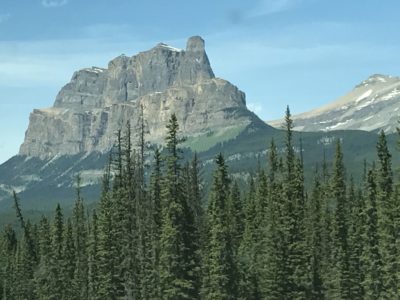
The road from Fairmont Hot Springs, British Columbia to Calgary, Alberta is ultimately scenic. It’s about a three hour drive, which I took a week ago today, with my mom, to take my daughter and son in-law to the Calgary airport. While driving, we saw mountain goats, deer, and a very large moose with wide expanse of rack standing just off the highway. Yes, it was impressive and a bit scary. Our drive also included gorgeous geography like the picture above that I snapped along the way. Deep green spruced forests. Ranges of sharp rising rocky mountains (Castle Mountain above) against deliciously open blue skies. The road from Fairmont to Calgary winds a fair amount. Lots of new views exposed around corners and turns. There was much to be in awe about.

The awe that I perhaps appreciate the most in that drive is the space. You can’t help but be impressed by the open expanse of geography. And, more clearly, it’s the way that that expanse calls out an inner expansive space within me that is so alluring. Space to imagine. Space to feel decompressed. Space to wonder and wander. Space to let go. Space to re-sort some of the inner stirrings. I’ve always loved the people that refer to us humans as nature (not “in nature”). Being in that drive (yes, a mechanical, non-nature vehicle) was pulling out inner nature from within me in a big way.

Most of us live in a culture that values compression. It’s true individually, communally, and organizationally. Doing more. Doing more in less time. Doing more in less time with less resources. Speed and efficiency are so revered and so linked to perceptions of intelligence, accomplishment, and value. It creates pressure, doesn’t it. To fill the moments with more so as to become more (or even curb the impression of losing ground). Yikes!

It was 15 years ago with friend (like a brother, friend) Toke Moeller through whom I first learned this template question that I ask often with people I work with — What could _____ also be? I think the first time I heard him ask it, it was about a school that he was working with in Denmark. What could this school also be? The “also be” is important to me. It honors what is, yet also invites imagination to what is, what what could be, evolving.

Back to space and becoming more, I find myself advocating much these days for the question, what could space also be? What could pause also be? What could emptiness also be? It’s fascinating to me, and also feels as natural and inherent as the feelings that arose when driving near Castle Mountain. What if we were to commit more to a strategic pause and invitation to release reverence for speed and scale (OK, I’m aware that I’m asking a question that calls for more of another kind — space; cultural stories run deep) and the fears that lay beneath them? It’s not a race! It’s not a race to be the last one able to survive amidst scarcity. Yikes again! These are indeed deep cultural stories, but in all fairness, aren’t the only stories that shape cultures — they are just the loud ones.

I know that I’m the kind of human being that deeply values the pause. In facilitation, it often means my desire is to double the amount of time that I plan for a particular section, even though the agenda is often calling for half the time. The pause and the space is fundamental to interrupt patterns and welcome a taste of the new. In individuals. In communities. In organizations. It is my experience, and my continued hope. that the awe and the space, just like it was near Castle Mountain, fills us in different and needed ways.
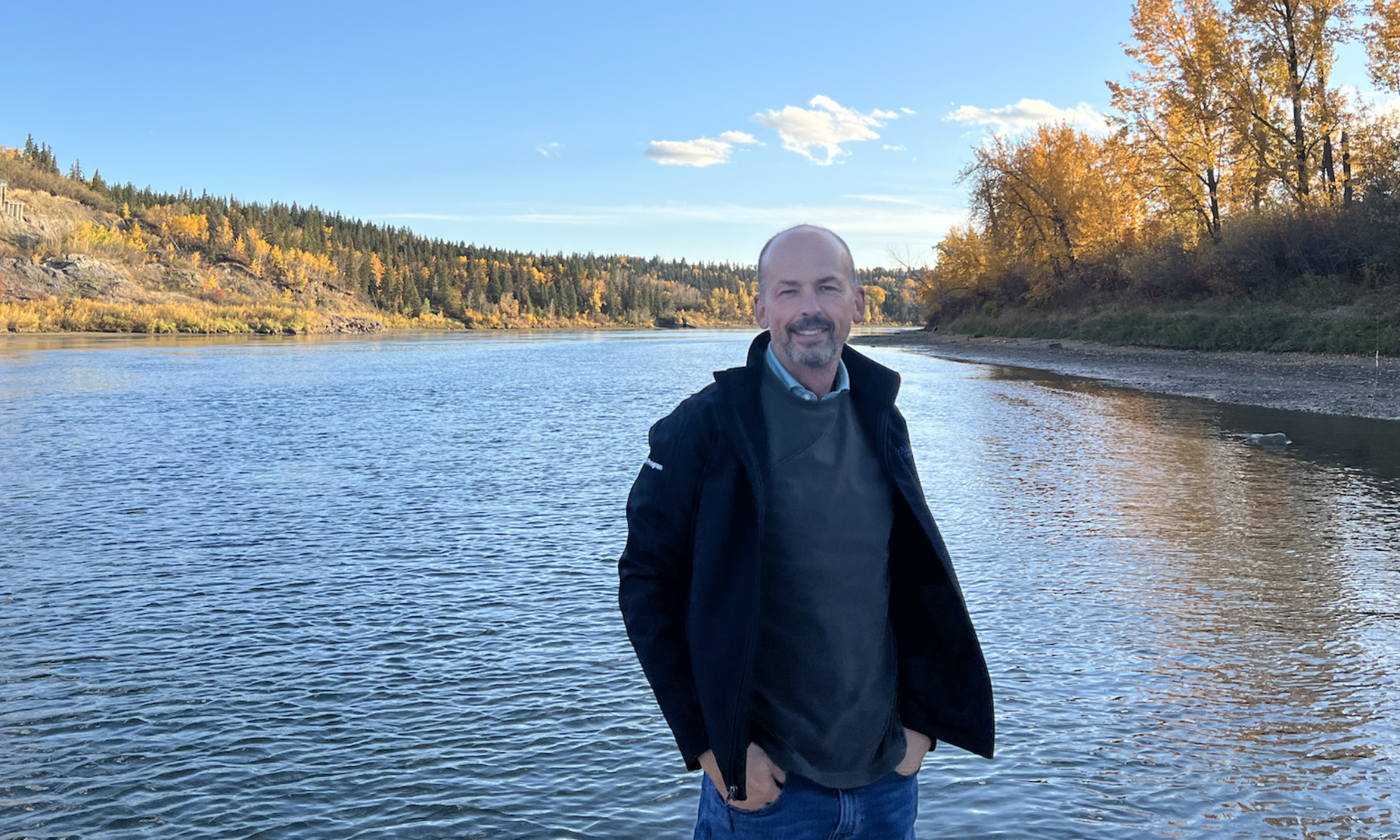

 

Friendship is the Business Model

Somewhere along the way, people began advocating for business and friendship to become separate. Like any separation, it had good intention. When it comes to business and friendship, curbing nepotism comes to mind.

But also. like any separation, it’s easy to overplay the initial good intent, rendering two things that are inherently related to be oddly and weirdly disjointed. Run amuck, this separation is a process of building not just protections, but protections around protections. The image for me is a system of hedges meant to create boundary from something in the middle. The original concept is to protect what is in the middle. However, humans being who we are, the emerged and frightened concept is to protect the hedges too. It’s like a parent saying “don’t ever go in to the kitchen” when the real need is to not turn on the gas stove and leave it unattended.

It was Chris Corrigan that first taught me this phrase — Friendship is The Business Model. It was in one of our Art of Hosting events over the last 15 years. It was a contrast to prevailing assumptions that friendship is too soft or too corrupt to be aligned with good business desire. Chris embodies this kind of friendship, which makes it all so much more accessible. He’s a stunning teacher, a sensitive and thoughtful human being, and a person who invites friendship as a most core practice. And, as always, I love the bridging between hard core business and deep human abilities. How can you argue with a good business model — that’s unchallengeable, right. Friendship, well that’s something that’s most often referenced as good to experience, and usually is interrupted by some comment from the business paradigm of “let’s get back to the real world now.”

Absurd.

In organizations — and in leadership in organizations — patterns matter. It’s less about tenacious command and control of all the infinitely minute details (though there are of course times and circumstances when that matters). It’s more about creating just enough narrative, practice, and container for patterns to be practiced at scale. Friendship is one of these. Funny, right. How silly. Friendship as narrative, practice, and container implies that it is important to develop our relationships with each other. It defines what we are up too — it’s not just producing products and services that can scale in the capitalist model. Friendship as narrative, practice, and container gives us alternative insight to what we are scaling. Friendship as a core to creativity. Friendship as an essence for innovation. Friendship as a core competency to lean into difficult circumstances. Friendship as organizing system for doing the daily work.

The best friends I have aren’t trying to coerce me into something. And if they are, it comes with a playful wink and a smile. The best friends I have are tuned to a bigger picture of evolving lives and circumstance, and are able to be serious about it, but also playful. The best friends I have lean into a mystery and enjoy going it both together and alone, but mostly together. When I think “business models” I think of what you go to the bank with to receive support of capital. Friendship is a kind of capital to grow together — and, yeah, is more than just numbers, and isn’t just open Monday through Saturday 9:00 – 5:30.

Narrative. Practice. Container. Business Model.


A Wanderer’s Noticing — Canal Flats, BC on Canada Day Weekend

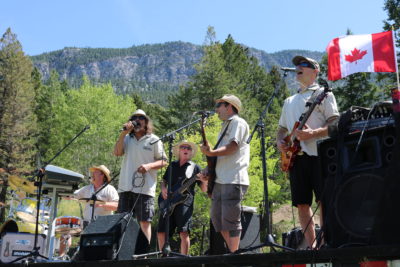
Canal Flats is a sleepy town, known for being on the north end of BC’s Columbia Lake. It is headwaters for the mighty Columbia River that eventually drains to the Pacific Ocean in the USA Pacific Northwest. The photo above is a band playing at the beach to commemorate and early Canada Day. It was all a surprise for us — my family and I were just in for a day at the beach, not knowing that this party would be going on.

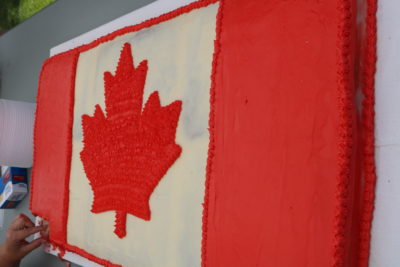
Big old cake with pieces for all to enjoy.

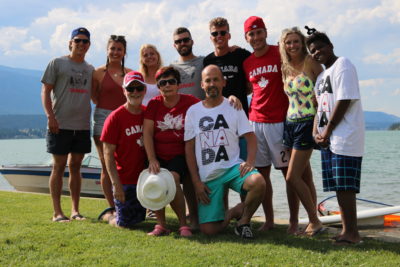
It’s family. My parents. Cousins. Nieces and nephews with there partners. My kids, my son in-law. That’s Columbia Lake in the background. This is the place where I most often get to remember family and the extended layer and a belonging that comes with that.

Gifts of Circle - Question Cardsasd
Gifts of Circle is 30 short essays divided into 4 sections: 1) Circle's Bigger Purpose, 2) Circle's Practice, 3) Circle's First Requirements, and 4) Circle's Possibility for Men. From the Introduction: "Circle is what I turn to in the most comprehensive stories I know -- the stories of human beings trying to be kind and aware together, trying to make a difference in varied causes for which we need to go well together. Circle is also what I turn to in the most immediate needs that live right in front of me and in front of most of us -- sharing dreams and difficulties, exploring conflicts and coherences. Circle is what I turn to. Circle is what turns us to each other."

Question Cards is an accompanying tool to Gifts of Circle. Each card (34) offers a quote from the corresponding chapter in the book, followed by sample questions to grow your Circle hosting skills and to create connection, courage, and compassionate action among groups you host in Circle.

This will close in 60 seconds

asd
In My Nature
is a collection of 10 poems. From A Note of Beginning: "This collection of poems arises from the many conversations I've been having about nature. Nature as guide. Nature as wild. Nature as organized. I remain a human being that so appreciates a curious nature in people. That so appreciates questions that pick fruit from inner being, that gather insights and intuitions to a basket, and then brings the to table to be enjoyed and shared over the next week."

This set of Note Cards (8 cards + envelopes)  quotes a few favorite passages from poems in In My Nature. I offer them as inspiration. And leave room for you to write personal notes.

This will close in 60 seconds

asd
Most Mornings is a collection of 37 poems. I loved writing them. From the introduction: "This collection of poems comes from some of my sense-making that so often happens in the morning, nurtured by overnight sleep. The poems sample practices. They sample learnings. They sample insights and discoveries. They sample dilemmas and concerns."

This set of Note Cards (8 cards + envelopes)  quotes a few favorite passages from poems in Most Mornings. I offer them as inspiration. And leave room for you to write personal notes.

This will close in 60 seconds