

A Wanderer’s Noticing — Lake Louise, Alberta

These two pictures are compliments of my daughter, Zoe Woolf McGinn (thanks Zoe), traveling with her cousins and her husband on the way to Fairmont Hot Springs. Lake Louise is a stunning place on the Alberta / BC border. I’ve been there in the winter also, about 25 years ago when the lake was frozen (people were skating on it) and everything was draped in snow.

Love the emerald color of these waters. And so many other lakes and streams that are part of this southwest Alberta / southeast BC location. People have asked me many times if Canada is beautiful. Of course it is. And of course it is all like this. But there really is some stunning geography that brings out the delighted and irrepressible wanderer in me.
 

A Wanderer’s Noticing — Missoula, Montana

For the next ten days (including next weeks Monday – Thursday posting), I’m wandering. Going more visual. In the context of a summer family time with my boys, my married daughter, my son in-law, my niece and her partner, my nephew and his partner, and my parents.

It’s a gift to just notice, the simple beauty in front of me.

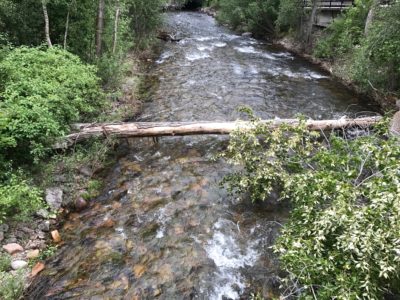
Every time I drive through Montana, a part of me says, I want to live here. It’s beautiful. Rugged. It is a stopping spot on my way to Canada (so a little closer to those roots). I think this is from the Clark Fork, and runs through Missoula.

The “M” near University of Montana, home of the Grizzlies. Can’t quite see it in this picture, but a friend told me that the lines up the mountain side are from glacial ice-age lake shorelines.

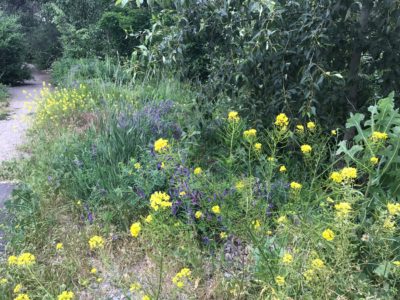
Even weeds are beautiful if you take the time. I enjoyed these on a morning walk while my boys slept, being the early bird person that I am.

Leadership Is Offering A Story

I was talking with a friend this week. He was sharing with me how his work is “complicated.” A specific chunk of the conversation was about “so many things to do,” including squirrels to chase. He offered a funny line — “The road to hell is paved with many interesting squirrels to chase.” We both laughed.

My friend and I both like paying attention. Systemic awareness, and perhaps overall curiosity as a human being, will inevitably involve a few squirrels. I encouraged him to take on what he loves about it rather than just lopping it in to a category of derogatory reference.

What I really loved with this friend is an aha of further nuancing leadership amidst complicated environments (maybe a bit complex too).

  1. The Need is Coherence — In the midst of all of those big lists that inevitably change, it’s not just whiz bang project management that is needed. It’s not just software to help coordinate. It’s not just tenacity to get done what is likely impossible. It’s not just “watching over” more diligently. Underneath complication and complexity is the need for  coherence. Enough shared reference to feel connection and relatedness.
  2. Coherence Comes From A Narrative — Yes, a story. Just like the ones that people used to read to us. Many kids love stories — my 12 year-old thrills at reading together at night or in the morning. Maybe that thrill never quite goes away. The story might be less interesting than the three bears. However, it is completely compelling. For example, a story is that “we (on team ___, at company ___) are evolving who we are. That requires commitment to our existing processes. However, it also means trying new things.” Enough simplicity to hold complexity.
  3. Narrative Is The Job of Leaders — Sometimes it is a marketing story. Hmm…, OK. The stories I like most are the honest ones that invite us to be fully human together. Creative. Imaginative. Leaning in to rough spots. It’s funny that offering the story still feels like a soft skill to many, right. It’s not detailed spreadsheet analysis. Yet it is an equally important form of “doing.” I’m guessing that 25% of the leadership work is helping to offer the story, to create coherence for groups of people to not just be tenacious, but self-organized into their work.

We are just trying to be better humans (thus the blog name, Human to Human, H2H). In many contexts. Through participative leadership, dialogue, and change. We are just trying to be smarter together. And more thoughtful. And more creative. And more kind. About the things we care about and that we contribute in our families, communities, organizations, and worlds.

That’s the story I tell myself.

On a Narrative For Practiced Curiosity

QT is one of the gatherings that I most enjoy, the most recent of which was at my home last weekend. It’s a format with some key components woven in to a Friday through Sunday container. These include:

  • A Good Hello — deep purpose and intimacy of sharing what brings each of us to the gathering.
  • Welcoming Dreams — the subconscious
  • Food and Cleaning Up Together — community
  • Following What Has Attention — we are subjective beings that can follow simple doorways
  • Roles — complexity of who we are
  • Art — multiple mediums
  • Ritual — the non-cerebral
  • A Good Goodbye — deliberateness of tucking in.

QT’s meaning isn’t set in stone. But “Quality Time” is one of the meanings that I like most.

The above components already create a narrative. In one line, it is about “a container for friends to deliberately practice curiosity together.” If you need a “so what,” one of my favorites is “so that we can better make sense of individual and communal lives and some helpful steps or practices that grow out of that.” Peeks in to the inner world often have great impact on the projected outer world.

One layer deeper than this, beyond “one line” is something that became clear at this Utah QT gathering. It’s a kind of road map that I find myself invoking. It’s not so much of the concrete steps (turn right in 100 meters, then left at the first corner). It is more naming stages of a journey (areas to give attention to).

  1. Say Hello — It’s a simple, yet often overlooked principle. Hello is more that saying your name, though it includes that. It is more than a go around to say where you work, thought could include that too. Hello is layered. Who are you? Why did you choose to come? What interests you? Remember that regardless of what is shared, it will be incomplete. But also remember that “hello” isn’t just a “todo.” It’s a start to growing awareness of the incompleteness of anything we say, and thus the need for some further hello.
  2. As A Way of Saying Hello, Share What Is It Like To Be You — Oh, where to start. “What is it like to be you?” welcomes the subjective. There is no wrong answer in what you name. It’s exciting. It’s discouraging. It’s communal. It’s lonely. It’s dreadful. It’s delightful. The only requirement here is to speak what is honest for you. And to know that whatever subjective quality is shared, it is likely to be very broadly human. It is very likely something that most humans can appreciate, though perhaps, from different circumstances.
  3. As A Way of Sharing What It Is Like To Be You, Share What Has Your Attention — Now it is drilling down a bit, right. However, again, these are subjective responses. It could be the good cup of coffee that you had this morning. It could be last nights terrorism report. It could be your pending vacation. It could be the overload of todos you carry with you on a daily basis. If it has your attention, this is permission to give it some deliberate attention — not as distraction, but rather, as key cue to follow.
  4. As A Way of Sharing What Has Your Attention, Start With What Is In Front Of You — This is largely about permission. Most of us have pretty long lists of “shoulds” or “need toos.” Most of us feel some pressure (or wisdom) to prioritize. That’s good and fine. However, this principle of permission and freedom is a variant of “start anywhere; follow it everywhere” that I first learned from Myron Rogers in early Berkana days. It’s a premise of deep systemic integrity and perhaps even spiritual maturity.
  5. Say Goodbye — Just as it is for hello, goodbye is more that saying “see yah!” It’s more than a rush out the door to get to the next. Practiced curiosity may be running in the background most of the time — I’d like to recommend it. However, there are some times of more deliberate curiosity that get tucked in. It’s some witnessing. It’s some gratitude. It’s a kind of deliberateness, layered perhaps again, that is never complete. Just some good wishes for self and others to carry what matters to the next, and to let go of what won’t, where it is.

Definitely enjoyable. Definitely centering — this container and narrative. And I love the nuancing of steps in the narrative.


Gifts of Circle - Question Cardsasd
Gifts of Circle is 30 short essays divided into 4 sections: 1) Circle's Bigger Purpose, 2) Circle's Practice, 3) Circle's First Requirements, and 4) Circle's Possibility for Men. From the Introduction: "Circle is what I turn to in the most comprehensive stories I know -- the stories of human beings trying to be kind and aware together, trying to make a difference in varied causes for which we need to go well together. Circle is also what I turn to in the most immediate needs that live right in front of me and in front of most of us -- sharing dreams and difficulties, exploring conflicts and coherences. Circle is what I turn to. Circle is what turns us to each other."

Question Cards is an accompanying tool to Gifts of Circle. Each card (34) offers a quote from the corresponding chapter in the book, followed by sample questions to grow your Circle hosting skills and to create connection, courage, and compassionate action among groups you host in Circle.

This will close in 60 seconds

asd
In My Nature
is a collection of 10 poems. From A Note of Beginning: "This collection of poems arises from the many conversations I've been having about nature. Nature as guide. Nature as wild. Nature as organized. I remain a human being that so appreciates a curious nature in people. That so appreciates questions that pick fruit from inner being, that gather insights and intuitions to a basket, and then brings the to table to be enjoyed and shared over the next week."

This set of Note Cards (8 cards + envelopes)  quotes a few favorite passages from poems in In My Nature. I offer them as inspiration. And leave room for you to write personal notes.

This will close in 60 seconds

asd
Most Mornings is a collection of 37 poems. I loved writing them. From the introduction: "This collection of poems comes from some of my sense-making that so often happens in the morning, nurtured by overnight sleep. The poems sample practices. They sample learnings. They sample insights and discoveries. They sample dilemmas and concerns."

This set of Note Cards (8 cards + envelopes)  quotes a few favorite passages from poems in Most Mornings. I offer them as inspiration. And leave room for you to write personal notes.

This will close in 60 seconds