Q T

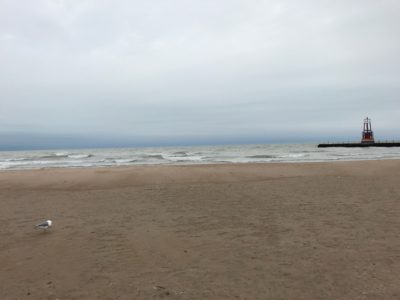
I so loved hosting QT Chicago at Lina Cramer and Dick Durning’s home this past weekend. Their home is near this beach in North Chicago on the western shores of Lake Michigan. I loved our friends that participated in a memorable experience mixed in circle, light ritual, and occasional song.

The experience, QT, is a format that Quanita Roberson and I have created, and now hosted four times over four weekends. The best description I have for QT — Quality Time, Quiet Teaching, Quanita-Tenneson — is a light structure for friends (old and new) to be deliberately curious together. It doesn’t really need a “so that.” But it’s funny to notice how given the absence of need for “so that” there is plenty that shows up. It’s powerful. Deep connection. Deep curiosity. Surprising clarity. Joy. Communing. As expansive as this lake and beach.

Thank you Lina and Dick for calling this in, for inviting us to offer it, and for all that helps reaffirm in me, and I think the group, the fundamental importance of simply being human together, and how hungry so many of us are for this.


An Exercise to Begin With

I’m thinking of gatherings where people are together for a good chunk of time — 1-3 days. But I imagine a shorter version for a shorter meeting.

I’m thinking of groups of 30-40 people because that is what I have most immediately coming up, but I imagine, it could be much more or less.

I want a good start. An interesting start. More than description of an albeit, good program. That description could be, and probably should be, included. But I want a beginning that feels like more than dusting off an old encyclopedia. I want to set a tone that is more than description as the first thing that people experience in a gathering when few people know each other. I want an immediate encountering of self. And each other. And the space that is between all of us, the collective whole.

Step 1 (5-10 minutes) — Individual Participant Work.
On a piece of paper write three words and one sentence to each of the following questions (these are samples):
– What were you good at as a kid?
– What do you love about the place you live?
– What is a superpower that you have (others may know or not know of it)?
– When was the last time you ate spaghetti?
– What scares you?
It’s not meant to be a polished essay. It’s more of an activation of thinking and feeling.

Step 2 (5-10 minutes) — Create Engagement, Groups of 2 or 3.
Share a bit of what you wrote, and what happened for you as you wrote it. Feelings? Surprises?
It’s not fixing. It’s creating friendship and grounding.

Step 3 (5 minutes) — Share in the Full Group
Let’s hear from a few of you. Popcorn style, out loud — are there noticings that you want to share from your sharing with your small group?
It’s not transcribing what happened. It is building expectation to witness each other and pay attention together.

Step 4 (5 minutes) — Create Bridge to Purpose of Gathering
Here’s the bridge for me. I want questions that point to the subjective (there is no wrong answer), the personal (showing up), the unknowable (vast and complex), and the irrelevant (spaghetti, really?). There are no wrong answers in each of these qualities.

I want what can feel like a bit of purposeful distraction that dislocates certainty that people have or that they think they should have as they begin. I want distraction that dislocates certainty and expectation of what people thought would happen to begin the gathering — to wake ourselves up in the context of the gathering. It’s not charismatic hand holding for me. It is fierce commitment to the entity that is the group.

Leadership — here’s the bridge — leadership and being in any form of group together requires an ability to dislocate certainty. Can any of us claim that we know everything that is happening? Of course not. That’s different than knowing important stuff, I understand. In participative leadership, in community engagement, in working with teams — there is a need for us to get good at being in messes and surprises. There is a need to become acutely good at working with what emerges through interaction with each other. That’s the game. Everything that follows — tools, methods, frameworks — all those good things are about helping to build this capacity.

To beginnings.
 

Difference In & Indifference — A Distinction

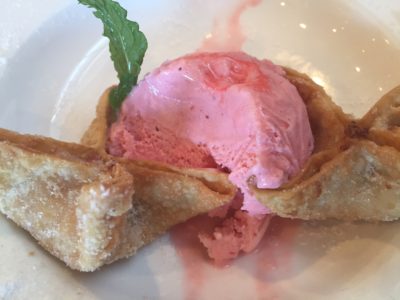
One person likes chocolate ice cream. The the other likes strawberry. Both are insistent and adamant that theirs is best. The above combines the best of both, by the way — those sprinkled, baked wontons have chocolate in them!

What helps?

There is a distinction I find helpful, even when it comes to ice cream. On the one hand, acknowledging a “difference in” is essential. Of course, nobody has to like chocolate. Of course, nobody is obligated to like strawberry. Whether it be due to taste, visual preference, memories of grandma, preference for fruit, of just because, preference for ice cream isn’t resolved by statistical analysis. It remains preference. Preference in which difference is natural and normal.

What connects our ice cream lovers, I would suggest, is appreciation. “Though I don’t agree with your preference of strawberry, I can really appreciate that you love ice cream.” It’s passion that then connects us rather than minor details that so commonly divide us. It’s appreciation for passion. Appreciation for love of. Even in difference.

Contrast this with “indifference,” the dynamic that I’m connoting here as “not caring.” “Indifferent to” is without feeling. Without care. Without concern. Without regard. Indifference is a tad more dismissive isn’t it. Probably even has a topping of judgement on it and a cherry of othering. “Don’t talk to me about chocolate ice cream — it bores me,” spoken with indifference, devalues what that chocolate lover cares about. That’s something to be careful about.

The tricky territory here is when “indifference” is overlaid and confused with “difference in.” I may not share your love of Nascar, but I can definitely get excited about your love of something, even speed. You may not share my love of writing poetry, but you can meet me with excitement about loving something, or the arts. Because chances are, you love something also.

Ah, these days of conflict, increased tension, polarization, shadow-projection, and the like — they are really something aren’t they. No, it’s not as simple as ice cream. I get that. But perhaps there is something for all of us in lifting our tastes a bit, challenging ourselves to deliberately relate to underlaying passion. It would be a shame to not see the love of dessert because of the flavor of the ice cream.

Mind Twist on “Self”

My favorite movies are ones in which it’s hard to tell what is real. Ones in which a grand illusion accepted as fact is debunked, or at minimum challenged. When time bends. When alternate dimensions are portrayed as real. “The Matrix” is one that I’ve enjoyed for that reason (blue pill, red pill). “Inception” is another (which layer of dream are we in). “Coherence,” though a little less known, is another (parallel universes). I love the twist that occurs in me. The temporary amplification of “what if, what if” that entertains the notion that reality is a semi-consensual distortion.

Dave Pollard, is one of the people I know that is most able to bend reality with thought. To twist perception. And, I believe he’s genuine in it. Not sensational. He is really wondering. Really daring himself to live as if.

And example of Dave’s twisting is from a recent post, “10 Things That Are Less Complicated Than They Might Seem.” Dave frequently makes distinctions between what is complicated and what is complex. It’s a distinction I often find myself working with in groups. And in this case, Dave takes on the notion of “self” and what if that notion of self is overplayed. A distortion. It’s tricky, right. I can’t quite figure it out, which might be the point. It pushes a few buttons in me. But something in this orientation and ability to debunk, even for a moment, feels attractive and important.

Here’s a sample. Read his full post for further twisting.

Thanks Dave.

Becoming a better person: If you are going to become, in your own judgement and/or the judgement of others, a better person, that will happen despite any volition on “your” part. There is, fortunately, no “you” — what appears to be a separate person with choice and free will is a mirage, a hallucination, a dis-ease, an unfortunate and accidental evolutionary misstep that emerged along with large, underutilized brains. This has nothing to do with predestination or fate. There is an apparent character that “you” think you inhabit and control, but what that character apparently does has nothing to do with “you” — the brain just conveniently rationalizes the character’s apparent actions after the fact in a way that lets “you” believe those actions were “your” choice and decision. So go easy on your self — the character in whose apparent watery bag of organs you believe you reside will do what it will do. You should assume no responsibility, and take no credit or blame for any of it. In fact, “your” presence most likely interferes with the character doing its best. Nothing for “you” to do, really. Easy, huh?

Gifts of Circle - Question Cardsasd
Gifts of Circle is 30 short essays divided into 4 sections: 1) Circle's Bigger Purpose, 2) Circle's Practice, 3) Circle's First Requirements, and 4) Circle's Possibility for Men. From the Introduction: "Circle is what I turn to in the most comprehensive stories I know -- the stories of human beings trying to be kind and aware together, trying to make a difference in varied causes for which we need to go well together. Circle is also what I turn to in the most immediate needs that live right in front of me and in front of most of us -- sharing dreams and difficulties, exploring conflicts and coherences. Circle is what I turn to. Circle is what turns us to each other."

Question Cards is an accompanying tool to Gifts of Circle. Each card (34) offers a quote from the corresponding chapter in the book, followed by sample questions to grow your Circle hosting skills and to create connection, courage, and compassionate action among groups you host in Circle.

This will close in 60 seconds

asd
In My Nature
is a collection of 10 poems. From A Note of Beginning: "This collection of poems arises from the many conversations I've been having about nature. Nature as guide. Nature as wild. Nature as organized. I remain a human being that so appreciates a curious nature in people. That so appreciates questions that pick fruit from inner being, that gather insights and intuitions to a basket, and then brings the to table to be enjoyed and shared over the next week."

This set of Note Cards (8 cards + envelopes)  quotes a few favorite passages from poems in In My Nature. I offer them as inspiration. And leave room for you to write personal notes.

This will close in 60 seconds

asd
Most Mornings is a collection of 37 poems. I loved writing them. From the introduction: "This collection of poems comes from some of my sense-making that so often happens in the morning, nurtured by overnight sleep. The poems sample practices. They sample learnings. They sample insights and discoveries. They sample dilemmas and concerns."

This set of Note Cards (8 cards + envelopes)  quotes a few favorite passages from poems in Most Mornings. I offer them as inspiration. And leave room for you to write personal notes.

This will close in 60 seconds