Nature Never Hurries

p1010524

l
“Nature never hurries, yet everything is accomplished.” — Lao Tzu, Chineses Philosopher, 6th Century BC

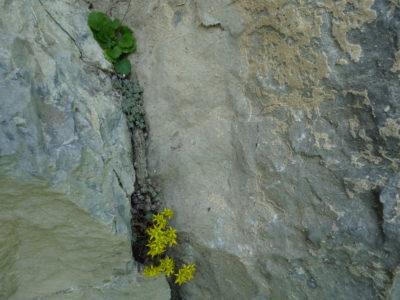
Thank you Glen Lauder for sending beautiful nature photos recently with this Lao Tzu caption. The photo above is one that I took from Stewart Falls, Utah in 2009. I spent the better part of a day there, alone. Some of it was taking pictures of what amazingly grows in rocks. I think of it as an irrepressible spirit of life.

Some things can’t help but grow. Can’t not blossom. It is this way with human beings also. And with human beings in groups. I’ve seen it many times. And irrepressible life generated by the most simple interactions, that grows from even very hard places.


A Center

p1010651

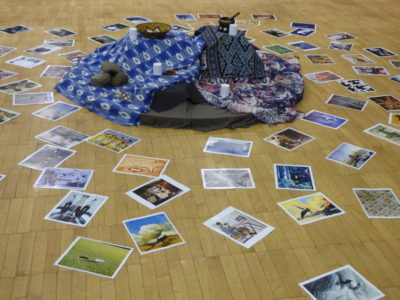
The center of a meeting space is a physical space. Yes. A point to which people have equal access. Or perhaps, unimpeded access. Or, shared access. It could be the center of a circle of chairs, a point on the floor with a book. Or flowers. Or cloths and bowls like in this above photo for a group of 120. It could also be the center of a table, marked by even a pen. A center is different than a front of the room. Yes, a front of the room is called for at times. Good. As always, don’t forget that there are choices. Physically, what I tell people that are just starting to learn participative leadership, is to get used to moving chairs. So that there is a center.

The center of a meeting space is also an energetic space. Yes. An area that can act as holding place for people’s intentions, questions, worries, imaginations, aspirations. It’s an area to place a thought, daring to let it rest with thoughts that others are also contributing. It’s an area to let energetically simmer what is arising from people interacting. I often think of the center as a giant pot for cooking soup. The ingredients for that soup are all that people add to the figurative middle of important work and discovery that we human beings need to cook together.

I love the photos scattered around this center. They were used as physical images in an exercise to invite people to come to the middle, in silence, and to select an image that represents some of how they feel about the business that we would be up to together on this day.

A call to come to the center of the work. A call to go to the center in themselves. They both matter. Physically. Energetically. Repeatedly.

Toxic Charity

A few years ago, my good friend and colleague Kathleen Masters gave me a book, Toxic Charity, by Robert Lupton. It’s a book written about the good desires of churches and missions trying to help, but creating unintended consequences of more hurt for those they are trying to help. It doesn’t just apply to churches.

In revisiting this book lately, I remembered the clear example of toxicity shared by the author. It was of a U.S. mission team rushing to Honduras to rebuild homes destroyed by a hurricane. The cost was $30,000 per home. The cost for locals to do it would have been $3,000 per home.

Or this example, a mission trip to repaint an orphanage equal in total cost to what would be needed to hire two local painters and two new full-time teachers, and purchase new uniforms for every student in the school.

Yikes, right.

Now let’s be clear. Mission trips aren’t just about a financial transaction. There are many unseen qualities that can’t be priced. Relationships that change who we are. Stories that we carry for forty years into the future. Being cracked open to sorrow and joy in others and in ourselves. All of that matters. A lot.

And, there is something to be said for reevaluating the values of our giving so as to create more sustainability. Yes, there is the old story of teaching a person to fish rather than giving the person a fish each day.

Lupton offers a compelling “Oath for Compassionate Service” that feels well worth remembering.

  • Never do for the poor what they have (or could have) the capacity to do for themselves.
  • Limit one-way giving to emergency situations.
  • Strive to empower through employment, lending, and investing, using grants sparingly to reinforce achievements.
  • Subordinate self-interests to the needs of those being served.
  • Listen closely to those you seek to help.

What I appreciate most in Lupton’s words are that he is helping to evolve an orientation. From the well-intended “give, give, give” to a message of “empower.” It’s an evolution from “doing to” to “doing with.” Even good things can turn out to be toxic — thanks Robert Lupton for helping shed some light on this evolution of charity.


Ode to Curiosity

It has long been a mantra that I’ve carried with me — be present, be curious. Four words to reground me in my efforts — work, community, family, relationships. And who doesn’t need a bit of regrounding in the ultra-stimulated world that many of us know so well. ” Four words that act like a road-map for being a good human being.

This Nic Askew film that features Seth Godin is a well-spent four minutes and seventeen seconds. Seth Godin is a popular American author, writing often about the post industrial revolution. I really love this endorsement of curiosity — the invocation to explore, ask questions, wonder, and wander.

Thanks Christina Baldwin for sharing this with me.

Enjoy.

Gifts of Circle - Question Cardsasd
Gifts of Circle is 30 short essays divided into 4 sections: 1) Circle's Bigger Purpose, 2) Circle's Practice, 3) Circle's First Requirements, and 4) Circle's Possibility for Men. From the Introduction: "Circle is what I turn to in the most comprehensive stories I know -- the stories of human beings trying to be kind and aware together, trying to make a difference in varied causes for which we need to go well together. Circle is also what I turn to in the most immediate needs that live right in front of me and in front of most of us -- sharing dreams and difficulties, exploring conflicts and coherences. Circle is what I turn to. Circle is what turns us to each other."

Question Cards is an accompanying tool to Gifts of Circle. Each card (34) offers a quote from the corresponding chapter in the book, followed by sample questions to grow your Circle hosting skills and to create connection, courage, and compassionate action among groups you host in Circle.

This will close in 60 seconds

asd
In My Nature
is a collection of 10 poems. From A Note of Beginning: "This collection of poems arises from the many conversations I've been having about nature. Nature as guide. Nature as wild. Nature as organized. I remain a human being that so appreciates a curious nature in people. That so appreciates questions that pick fruit from inner being, that gather insights and intuitions to a basket, and then brings the to table to be enjoyed and shared over the next week."

This set of Note Cards (8 cards + envelopes)  quotes a few favorite passages from poems in In My Nature. I offer them as inspiration. And leave room for you to write personal notes.

This will close in 60 seconds

asd
Most Mornings is a collection of 37 poems. I loved writing them. From the introduction: "This collection of poems comes from some of my sense-making that so often happens in the morning, nurtured by overnight sleep. The poems sample practices. They sample learnings. They sample insights and discoveries. They sample dilemmas and concerns."

This set of Note Cards (8 cards + envelopes)  quotes a few favorite passages from poems in Most Mornings. I offer them as inspiration. And leave room for you to write personal notes.

This will close in 60 seconds