

On Trauma and Hosting Collective Healing Spaces

I participated in a phone call today with a group of 16, giving attention to trauma and collective healing spaces. The premise for those inviting the inquiry is that healing, or at minimum, attention and awareness to historical and individual trauma, may need to precede shared dialogue about vision and possibility.

I have mixed feelings on this. But the inquiry feels important.

Last fall, after meeting with a group of many of the same people from today’s call, I wrote a short article that included these eight “What If?” questions, that work with the narrative of trauma. The full article is available here.

1. All people have trauma.
Not just some. Not just the unfortunate. Trauma is a widely shared human experience, just as is joy or laughter. We tend to accept the latter as common, but the former as isolated. Perhaps this is not so. Many of us have learned to wear masks to cover our trauma. It seems that much of contemporary western society has deemed this OK, a kind of unnecessary shaming.

2. Trauma is rooted in overwhelm.
As stated above, physical, emotional, spiritual. Direct experience and encoded DNA that are substantial enough to induce physical states ranging from constriction and fear to paralysis and debilitation.

3. Not all trauma is the same.
Trauma has many cousins. It is not the same as disappointment or let down. It is not the same as embarrassment or shame. It is not the same as intensity or complexity or confusion. Distinction matters.

4. Trauma doesn’t have to define us; it provides context.
At the root of hosting collective healing spaces is a desire to interrupt pattern, known or not, of trauma and how it’s invisible presence tackles us. Unaddressed trauma often restricts, imprinting toxicity at deep levels, such that, the best of group processes are significantly limited. Working at bigger scale, or deeper scale, requires getting to the roots. People long for a quality of space and relationship together. Awareness of trauma identifies important markers on the map, that are often, surprisingly, shared.

5. “Fixing” isn’t a helpful verb when it comes to trauma.
“Giving room to breath” may be more helpful. At the heart of healing is coming into deliberate relationship. With people. With experience. With events. It is less about forgetting or blaming, though these can be important steps along the way. It is more about being willing to try on alternative ways to relate to people, experiences, and events. To move from singularity of certainty to plurality of awareness. For some it is their profession to work more deeply with trauma. Councilors. Therapists. Psychiatrists. Social workers. For those of us who are process facilitators, I believe we are creating containers of interaction that break an enslaving silence. Not fixing. Just deeper presencing to what is.

6. To heal trauma isn’t to heal it in “them,” but rather, to heal it in “us.”
Contemporary western society has arguably lived the last two hundred years fascinated with a philosophy and practice of separation. In North America, this expresses itself as a rugged individualism. A world of competition, speed, and efficiency. This overarching narrative has legitimized a kind of “othering” in the world. An endorsement of an illusion that we are separate. The story has created the reality. Fortunately, many now are reclaiming a story of wholeness, interrupting the story of separation and the blame and attribution it has created. Arguably, separateness and othering are a tap root of trauma in many of us.

7. Connection to self underlays most practices of healing.
The self that is story. The self that is a group of people. The self that is a seemingly invisible whole of life. Hosting collective healing spaces is about creating multiple formats to access that self. Combining methods is attractive. It creates what so many long for as “safe space.” “Empowered space.” It creates engagement that satisfies the needs of introverts, extroverts, those who speak readily with words, those who speak readily with silence, or with movement, or with song, or with voice dialogue. Connection to self creates belonging.

8. People whose profession is tending to others, often don’t tend enough to self.
It sounds noble, and I believe is, to always “be there” for another. Without fail. No matter what. Yet, this deeply held value embedded in many human service professions can cumulate into an odd kind of abandonment of self, or absence of tending to self.
Invitation — The Art of Asking, Amanda Palmer Style

A friend sent me this TED Talk, The Art of Asking, featuring Amanda Palmer. It is 13 minutes.

Amanda Palmer is an American musician and performer. I don’t know her music, but will get curious. What I do know is some key values on invitation that are part of her story recorded in this TED Talk, and that feel spot on.

I particularly like:

  • random closeness
  • falling into the audience, trusting each other
  • I become the hat
  • I didn’t make them; I asked them
  • I trust you this much; should I?
  • ask without shame
  • the standing ovation that she gets


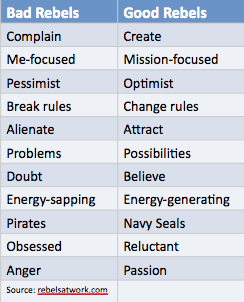
Good Rebels & Bad Rebels

I’ve been reading a bit lately from this book, Rebels at Work: A Handbook for Leading Change from Within. I met Lois Kelly, one of the authors, at ALIA last year in Tacoma, Washington. My partner Teresa and I were offering a workshop on Strategic Mischief-Making.

gd.-vs.-bad-rebels-July-2012Lois asked to interview me later this summer. She is researching how to lead change through hosting conversations around important questions. I don’t know if will stick, but I love her working title, “Be a Badass, Good-Hearted Change Agent: Getting Real About Leading Change.”

I’m drawn to the notion of “rebel.” I think I’ve always been the kind of human that believes there is another way. Always. There is always choice. I can’t help but think that way. It’s frustratingly confining when I find myself in an environment that has lost sight of this. Thus, some of the value I add is awareness and practices to restore choice. I recognize that I’m part rebel, good. I recognize, also, that my inner rebel is fiercely committed to evolution of choice.

Lois and her co-auther Carmen Medina offer a chart of distinctions between “good and bad rebels.” I know it isn’t that simple. I never feel that it is. I don’t think they do either. But the chart is invitation to some very good and important conversations about some qualities that are pretty bad-assed good, no?

Thanks Lois and Carmen for your work.


Miss Rumphius, The Lupine Lady

One of my favorite books to read with my kids when they were younger is called Miss Rumphius, by Barbara Cooney. Written in the 1980s, it’s one of those books that isn’t just for kids.

What I remember from the basic story line is that Alice, a young girl who would become Miss Rumphius, tells her grandfather that she wants to be like him when she grows up. She wants to do two things. Travel to places far away. And return to live by the sea. Her grandfather acknowledges her with a good grandfatherly smile, and then challenges her to do one more thing. Make the world more beautiful.

LupinesThe story tells of Alice’s adventures around the world, and then coming to return to live by the sea. Now, grown, and aging herself, Miss Rumphius puzzles over how to make the world more beautiful. She sees wild lupines, loves them, and decides to order enough seeds to scatter to all places in and around her village. Some people thought she was crazy, walking with her hands in pockets, scattering seeds. Yet, a year later the seeds hand grown to plant and flower. Lupines everywhere! Pinks, purples, blues, whites. She became known in the story as The Lupine Lady. Miss Rumphius had made the world more beautiful.

The part that I love to tell my kids is that they too can make the world more beautiful. Lupines are just a way in, just an example that they can connect with in the story. I tell them they have many options and choices that they don’t have to know now. Through their work, their hobbies. Through the things that they like to do. Through being with friends. The specifics matter less. The energy of beauty and and doing beautifully matters much.

I’ve used the story often, when departing for my work that involves travel. In the heart tugs that I have known of going away from my kids, I tell them, honestly, that I feel I’m trying to make the world more beautiful. I’d like to think they have come to know more about that over the years. A bit here and there about how I work as a facilitator to design and lead meetings so that people can be in meaningful conversations about the things that matter most to them. Be smart together. Be heart-filled together.

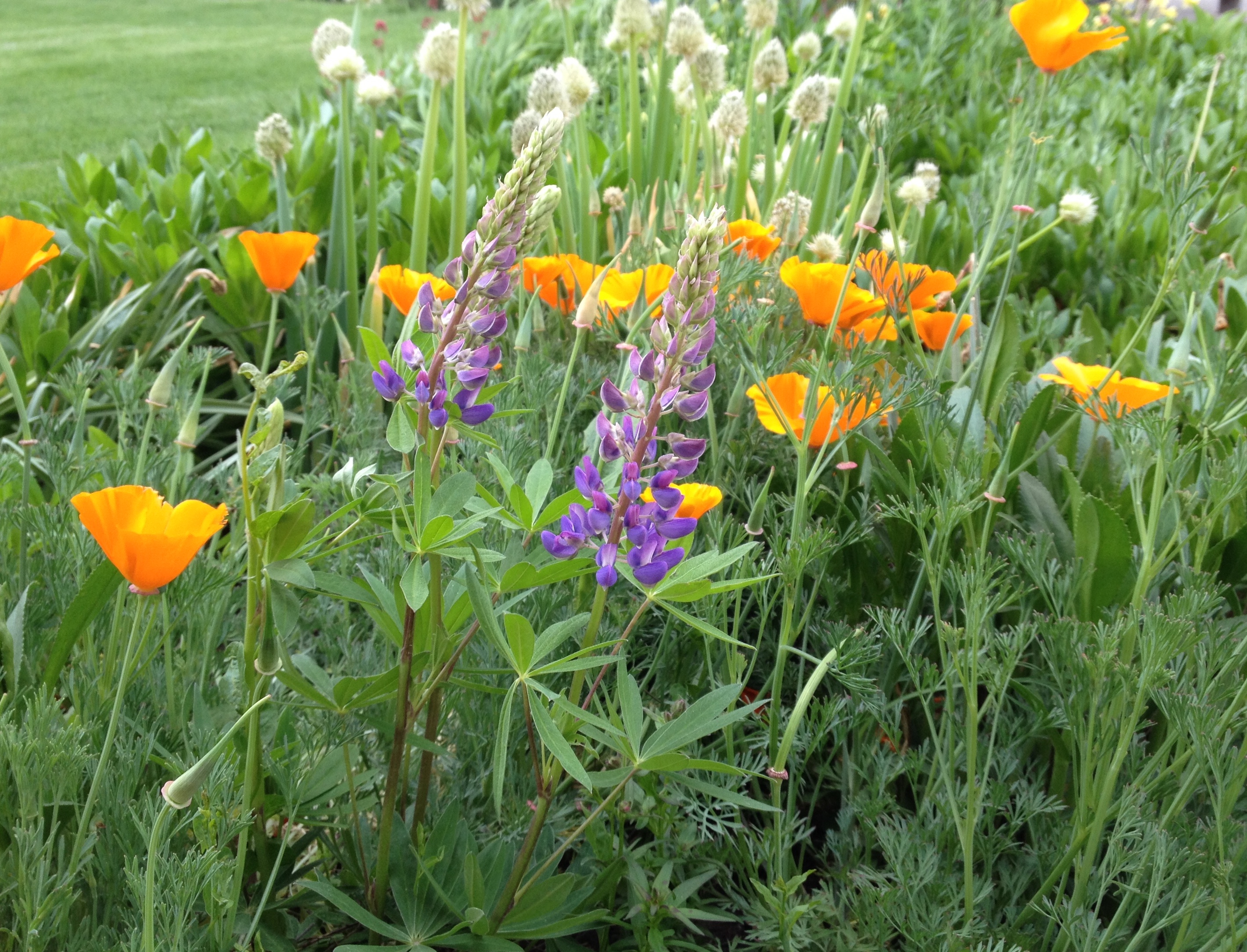
I smiled yesterday as my youngest child and I walked past one of our garden patches. Amidst the bloomed California Poppies, the Columbine, the greenery of what will become thick Daisies and Brown-Eyed Susans, the small green onion patch going to seed, and an Iris ready to bloom this week, a Lupine had showed itself in bloom. Three stems. I have been trying to grow these for a few years without much luck.

It gave me a moment to stop with Elijah and ask if he remembered the story of Miss Rumphius, The Lupine Lady (he’s more interested in Mindcraft, Sims, and other online environments these days). He did. He told me a pretty good version of it. And off we went, laughing together.

Gifts of Circle - Question Cardsasd
Gifts of Circle is 30 short essays divided into 4 sections: 1) Circle's Bigger Purpose, 2) Circle's Practice, 3) Circle's First Requirements, and 4) Circle's Possibility for Men. From the Introduction: "Circle is what I turn to in the most comprehensive stories I know -- the stories of human beings trying to be kind and aware together, trying to make a difference in varied causes for which we need to go well together. Circle is also what I turn to in the most immediate needs that live right in front of me and in front of most of us -- sharing dreams and difficulties, exploring conflicts and coherences. Circle is what I turn to. Circle is what turns us to each other."

Question Cards is an accompanying tool to Gifts of Circle. Each card (34) offers a quote from the corresponding chapter in the book, followed by sample questions to grow your Circle hosting skills and to create connection, courage, and compassionate action among groups you host in Circle.

This will close in 60 seconds

asd
In My Nature
is a collection of 10 poems. From A Note of Beginning: "This collection of poems arises from the many conversations I've been having about nature. Nature as guide. Nature as wild. Nature as organized. I remain a human being that so appreciates a curious nature in people. That so appreciates questions that pick fruit from inner being, that gather insights and intuitions to a basket, and then brings the to table to be enjoyed and shared over the next week."

This set of Note Cards (8 cards + envelopes)  quotes a few favorite passages from poems in In My Nature. I offer them as inspiration. And leave room for you to write personal notes.

This will close in 60 seconds

asd
Most Mornings is a collection of 37 poems. I loved writing them. From the introduction: "This collection of poems comes from some of my sense-making that so often happens in the morning, nurtured by overnight sleep. The poems sample practices. They sample learnings. They sample insights and discoveries. They sample dilemmas and concerns."

This set of Note Cards (8 cards + envelopes)  quotes a few favorite passages from poems in Most Mornings. I offer them as inspiration. And leave room for you to write personal notes.

This will close in 60 seconds