Don’t Blame Each Other For Complexity*

What if complexity were just complexity? Multiple relations in multiple networks of people in multiple timelines that don’t always line up conveniently. As human beings, we try to look for simplifications in our plans. Often, we project our desire for a kind of simplicity onto situations that will never be as simple as we like. It’s a bit like saying rocket science is as simple as a match and some fuel. That may be true at some level, but isn’t particularly useful.

When a situation gets messy, most of us look for reasons to explain why things aren’t clear. Most of us are accustomed to a kind of blame or attribution of fault. Without forgoing an essential agreement of accountability, what if we were to acknowledge that complexity rarely requires blame, but rather, adaptation?

We laugh together when the weather is unpredictable. Though we may be frustrated that the picnic doesn’t go as planned, there aren’t too many of us who hold weather forecasters to an unforgiving certainty of prediction. We bring an umbrella, or put it away, and move on. Complexity is just complexity.

*Excerpted from Participatory Leadership Journal, Church and Community Workers, “Bloopers and Breakthroughs,” p. 82, by Tenneson Woolf and Kathleen Masters

Resilience and Robustness

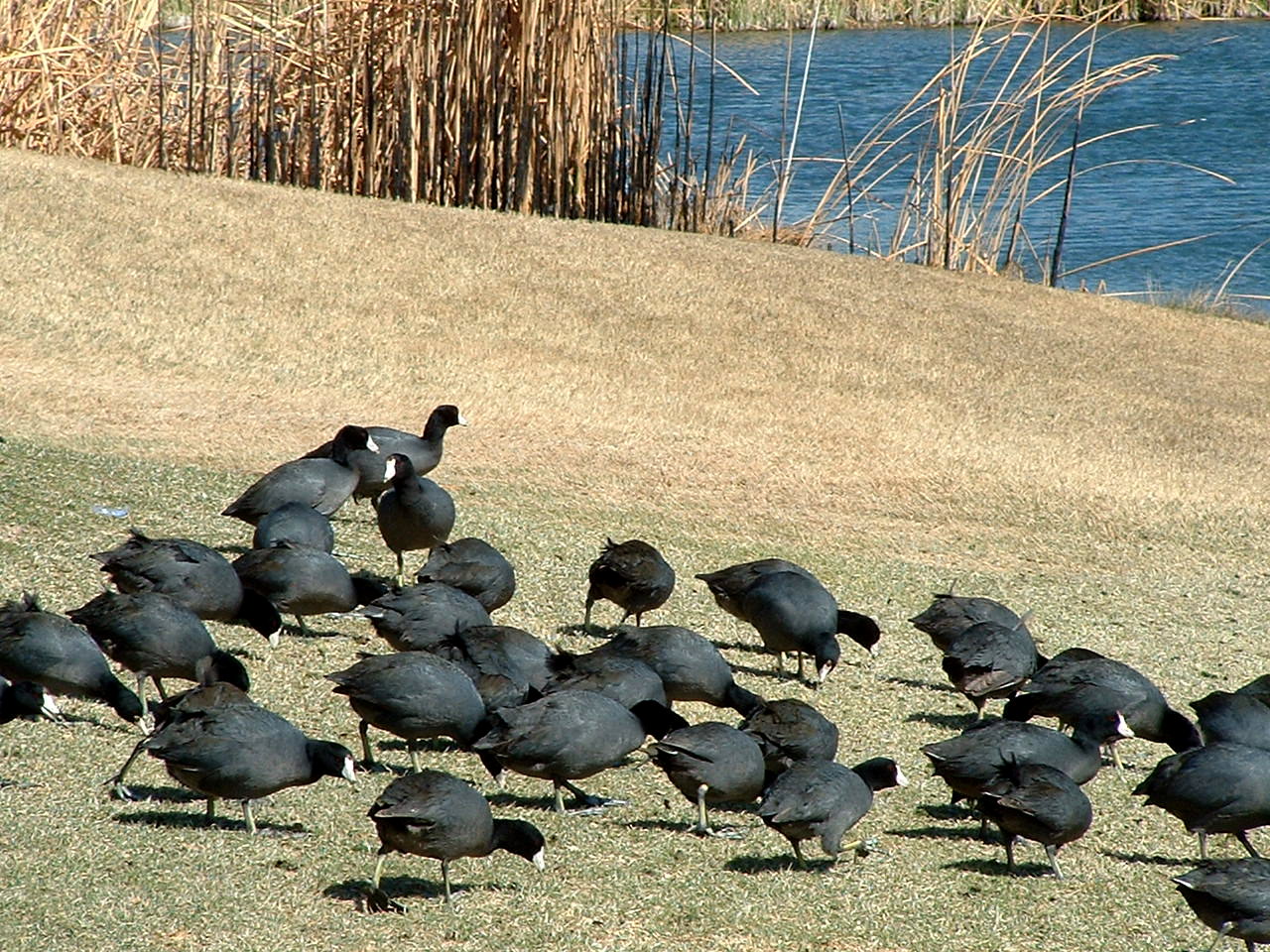
CootsI like this image of Coots, a photo that I took several years ago while in Southern Utah. One of the reasons is that these images of nature, of living systems, remind me, or inspire me, to understand self-organizing systems. It was my friend Margaret Wheatley who spoke a premise so often when I first met her in the early 90s. “Organizations are living systems. Living systems have the capacity to self-organize. What if we were to try to organize human endeavor in the way that life organizes itself.”

This focus on self-organization has much to do with complexity. My friend Kathleen Masters and I are exploring creating a workshop together. We want to give more attention to understanding complexity in complex human systems. At this point we are gathering resources.

One of those resources is from Dave Snowden, the same person that has offered so much on the Cynefin model. Kathleen reminded me recently of a distinction Snowden makes between robust systems and resilient systems. In short, it is that robust systems put a lot of energy into preventing failure. Resilient systems put a lot of energy into making it “safe to fail.”

It seems admirable on the surface, this “preventing failure” approach, doesn’t it. I don’t mind the descriptor of robust. It has typically connoted a kind of diligence, rapt attention, and preparedness. Pretty cool. The contrast in resilient systems is an acknowledgement of the essential experimental nature of complex systems, in which redundant, simultaneous experiments are happening all of the time. And many of them fail. Preventing failure restricts choices and constrains learning. Safe-to-fail expands choices and requires learning.

Snowden offers more on early detection and adaptation, which I think are helpful. But the kicker here to me is that our mindset must shift from an obsession of “get it right” to “adapt, learn, adapt, learn.” The latter welcomes, provides freedom and encouragement, to learn through failures. The former punishes it, which sadly, is common practice in  in management fields.


Simple Pieces in Complex Wholes

I am a fan of the simple. I have made this clear many times before.

Simple, however, has nuance. At one level, “simple” is the essence. It is both attractive and important. The energetic heartbeat of a concept. The core purpose held by a group of people. From essence, clarity can cascade into clarity in so many other related places.

Simplicity is not reductionism. Let’s be clear with that. It is not convenience to then be imposed as single solution or absolute layer of meaning.

These days I’m revisiting some of my learnings on complexity over the last twenty years. One of those is the awareness that the history of western science over the last three centuries has been focussed on dissecting. Braking things into parts. Parts into subparts. Subparts into sub-subparts, and so on. It’s rather impressive.

The flawed premise, however, in this singular focus, has been that if we could get to the smallest unit of existence — an atom, a nucleus, a quark — we would then know the important governing principles for the whole, reassembled back together from its parts. At some level this feels true. Particularly for it’s fractal-like orientation. Simple conditions do create complex behavior (think of birds flocking). Yet, there is something seductively incorrect in this also.

Systems, in fact, take on properties of their own, that do not arise from the property of the part or of the individual. They arise from the engagement of the system. These properties have an emergent quality or a spontaneous self-organizing quality. Simplicity may be noticed in isolation. But it is different than the simplicity that comes from “parts” in relationship together.

When I revisit this kind of thinking on complex wholes, I’m reminded of a simple observation I had with my son many years ago, then three, who was of course learning to speak. Language acquisition remains a kind of miracle to me. At that stage of his life, our interaction often included me pointing at something and asking the question, “what is that?” He would respond. I would repeat the question with several different objects. One of those objects was an orange peel. I asked him what is was. “Peel-of-an-orange.” He said it like it was one word, not four words. He responded in a way that showed me he was seeing a kind of whole.

Just as it was for my son learning language, I feel that we as adult humans now are learning to see wholes. Relearning, I suppose. Not just individual chess pieces but the whole chess board, as chess masters do. To see the collective properties that are different from the properties of individual parts. It is a different kind of simple. It takes a different kind of instinct, that contradicts 300 years of habit, yet perhaps is as natural as a three year-old naming something new.

 

Relief

Finley Falls 4I have spent the last three days in the grasp of a flu and cold. Body aches. Chills. Fatigue. Coughing. Raw throat. Runny nose. Watery eyes. You get the picture. I’m glad this doesn’t happen often, but the last three days have been full on.

Today, hopefully, the turning point that I feel this morning will hold through the day. I will be released into relief. Not fully better. Just beyond the thickest and most fatiguing parts.

I learned a lot about the kind of sick person I am over the last three days.  Indulge me. One is that I’m the kind of sick person that appreciates being alone. I like to find a place to lay down, be completely quiet, and lick my wounds so to speak. If I were the USS Enterprise in a Star Trek episode, I just need to slow down to impulse power. Nothing near warp speeds that so regularly define my days.

So as not to sound only like a completely geeked Trekkie, I am coming to really value periods of slowing down. Not just as imposition from a flu, as the last three days have been — that is a different category — but as deliberate strategy for overall well-being. Emptying my mind. Letting go of todo lists. Not filling every available moment of time with something productive. I’m more productive when I’m less productive, if that makes sense.

Much of my thinking lately has been about presence, presence as core competency. With a friend that I’ve started writing with, we have asserted that presence is “the” core competency. In the 24/7 ever-on world in which most of us live and work, tenacity has trumped presence, rendering its need nearly invisible. He or she that gets the most done wins. I’ve long admired the nobility of such tenacity. It has a buzz to it, doest it. I find, these days, that that buzz, unchecked, is a trap. It is a kind of seduction. It can take many of us away from an essential grounding, an essential presence that I believe most humans want to feel, need to feel.

I’m hopeful in this day. Just for a relief. Just for a turning of the corner. And for the picture of presence-making that is more commonly grasping and grounding me.


Gifts of Circle - Question Cardsasd
Gifts of Circle is 30 short essays divided into 4 sections: 1) Circle's Bigger Purpose, 2) Circle's Practice, 3) Circle's First Requirements, and 4) Circle's Possibility for Men. From the Introduction: "Circle is what I turn to in the most comprehensive stories I know -- the stories of human beings trying to be kind and aware together, trying to make a difference in varied causes for which we need to go well together. Circle is also what I turn to in the most immediate needs that live right in front of me and in front of most of us -- sharing dreams and difficulties, exploring conflicts and coherences. Circle is what I turn to. Circle is what turns us to each other."

Question Cards is an accompanying tool to Gifts of Circle. Each card (34) offers a quote from the corresponding chapter in the book, followed by sample questions to grow your Circle hosting skills and to create connection, courage, and compassionate action among groups you host in Circle.

This will close in 60 seconds

asd
In My Nature
is a collection of 10 poems. From A Note of Beginning: "This collection of poems arises from the many conversations I've been having about nature. Nature as guide. Nature as wild. Nature as organized. I remain a human being that so appreciates a curious nature in people. That so appreciates questions that pick fruit from inner being, that gather insights and intuitions to a basket, and then brings the to table to be enjoyed and shared over the next week."

This set of Note Cards (8 cards + envelopes)  quotes a few favorite passages from poems in In My Nature. I offer them as inspiration. And leave room for you to write personal notes.

This will close in 60 seconds

asd
Most Mornings is a collection of 37 poems. I loved writing them. From the introduction: "This collection of poems comes from some of my sense-making that so often happens in the morning, nurtured by overnight sleep. The poems sample practices. They sample learnings. They sample insights and discoveries. They sample dilemmas and concerns."

This set of Note Cards (8 cards + envelopes)  quotes a few favorite passages from poems in Most Mornings. I offer them as inspiration. And leave room for you to write personal notes.

This will close in 60 seconds