
Better Humans

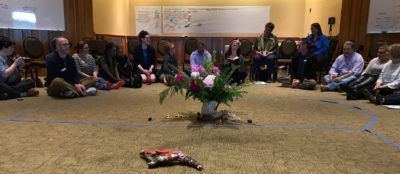
There are many narratives that I find myself invoking in the work I get to do. I’m talking about leadership trainings (like the one above, last week in Portland, Oregon), customized workshops, building communities of practice, hosting spaces for deep listening and good connection. I work and live in contexts in which the surface of attraction is often about getting tools and skills. These are good and important. However, the narrative that I add, to give context to those tools and skills, is most often about “being better humans.” That’s the crux of it to me, in leadership and community, inspired of course by my desire to be a better human myself.

By better humans, I don’t mean Version 3.0 of an impressive cyborg (it’s summer in the US — the inevitable movie releases are upon us). Better humans is not about more impressive science fiction and weaponry. Better humans is about a more radical simplicity together. Being able and expectant about listening with one another. Not groaning and tolerating sitting in a circle together — so that we can get back to the “real work” as quickly as possible — that’s more like enduring a scolding from a parent. Better humaning is about leaning in to the inherent subjectiveness of life. It is about being able to show up in learning, being willing to be in relationship together, being honest (in particular about the things that we don’t know), and being imaginative together (fed by the energy and spirit of the group).

In thinking about better humans, I’m reminded of Christina Baldwin’s distinction about two seemingly related concepts — “speed” and “pace.” Speed is the guy running through the airport talking on his cell phone. Pace is holding the hand of a toddler as you slowly walk around the block noticing butterflies, daisies, and squirrels.

Adding more tools to your tool box is impressive. And sometimes impressive in the way it expands to a tool bench. However, better humaning is more stories in you story-catcher. It’s about more appreciations of the human condition, whether in isolation or in community. Better humaning is the kindness in the eyes of the person using those tools to make a rocking horse for a grandchild — not just putting a new spin on manipulating a modality to get through a meeting.

Better humans. It’s my hope for me. It’s my hope for us. It’s willing to get on the floor, away from the powerpoint. It is the work.
Decision Making in Participative Leadership

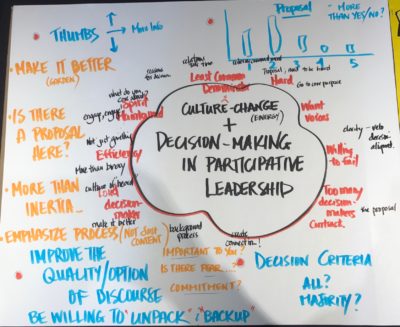
The above is from Transforming the Way We Lead. I hosted a small group (Knowledge Camp) on the topic of decision making. For the 14 our us huddled together, it had some of the things you would expect. It also had some key points of emphasis.

  • Using thumbs (up, sideways, and down) to get a measure of support for an idea. And definitely more than yes or no. Nuance, please!
  • The need for a proposal of action or agreement (more than just a loop of albeit interesting conversation).
  • A Likert Scale, whether five point or seven point. Again, more than yes or no.
  • Clear decision-criteria upfront. Majority? All? Nothing below a “3” on the Likert scale?

The above were all things that I expected and wanted to share / teach. However, what really caught my attention, from the questions that people were asking, was the need for an overarching container for a high quality of discourse. So that, as needed, you can unpack what is being spoken and questioned. Or listen to sideways thumbs. Or backup as needed. Enter The Circle Way. It is the container that I most rely on for such things. To go deep, yet with light structure. 

Thanks to everyone that participated. And this key reminder.


Designed


Designed. Indeed.

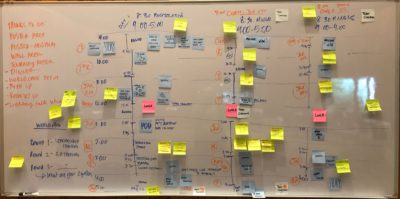
This is our whiteboard design for Transforming the Way We Gather and Lead: An Art of Hosting Intensive. It’s the agenda. It starts today. From a rough draft of three weeks ago, most of this came together yesterday.

This is a three day, non-residential version. Design that is not just planned, but welcomed to arrive in the four of us creating together — Kevin Hiebert, Jessica Riehl, Jordan Rosenblum, and myself.

It has the kinds of things that define a template for The Art of Hosting. Teachings. System frameworks. Core methodologies. Space for stillness. It also has unique features that come because this is our team. Not just stuff that we should do, but stuff that is distinctly interesting and compelling to who we are together.

Today, 40 people will come. They’ll see this version. Transparency matters. They’ll also see a fancier version (thanks Jordan). In how I think of it, we are part of a local story, and a bigger story. People everywhere want to do good with each other. People are hungry to be smarter together. People are hungry to feel more, imagine more, and contribute to a world that feels rather complex.

By design.

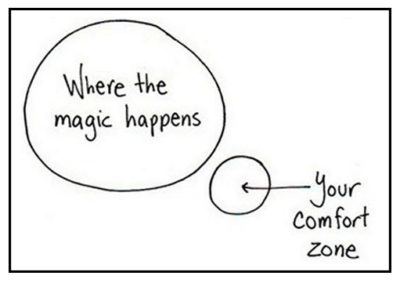
Where The Magic Happens

Thanks United Church of Christ, Central Pacific Conference for the above drawing. It was in a mailing inviting a program of “Radical Welcome, Transformative Faith, and Whole-Hearted Church.” Good, right?

I’m not working on this program, but my contribution is with a team of inspired, thoughtful, and magic-committed people. We are working together for a second year of Annual Meeting (September 2017) held in a participative format. It’s about a good meeting. It’s also easy for me to say it’s about the magic of spirit, of human being turned together in simple ways, of listening deeply for the audible and in the inaudible, of seeing the visible and the more subtle. It’s about encouraging and growing the reality of a culture that expects to engage.

Enough said. Here’s to magic and the willingness to go outside the comfort zone to welcome it to arrive.

Gifts of Circle - Question Cardsasd
Gifts of Circle is 30 short essays divided into 4 sections: 1) Circle's Bigger Purpose, 2) Circle's Practice, 3) Circle's First Requirements, and 4) Circle's Possibility for Men. From the Introduction: "Circle is what I turn to in the most comprehensive stories I know -- the stories of human beings trying to be kind and aware together, trying to make a difference in varied causes for which we need to go well together. Circle is also what I turn to in the most immediate needs that live right in front of me and in front of most of us -- sharing dreams and difficulties, exploring conflicts and coherences. Circle is what I turn to. Circle is what turns us to each other."

Question Cards is an accompanying tool to Gifts of Circle. Each card (34) offers a quote from the corresponding chapter in the book, followed by sample questions to grow your Circle hosting skills and to create connection, courage, and compassionate action among groups you host in Circle.

This will close in 60 seconds

asd
In My Nature
is a collection of 10 poems. From A Note of Beginning: "This collection of poems arises from the many conversations I've been having about nature. Nature as guide. Nature as wild. Nature as organized. I remain a human being that so appreciates a curious nature in people. That so appreciates questions that pick fruit from inner being, that gather insights and intuitions to a basket, and then brings the to table to be enjoyed and shared over the next week."

This set of Note Cards (8 cards + envelopes)  quotes a few favorite passages from poems in In My Nature. I offer them as inspiration. And leave room for you to write personal notes.

This will close in 60 seconds

asd
Most Mornings is a collection of 37 poems. I loved writing them. From the introduction: "This collection of poems comes from some of my sense-making that so often happens in the morning, nurtured by overnight sleep. The poems sample practices. They sample learnings. They sample insights and discoveries. They sample dilemmas and concerns."

This set of Note Cards (8 cards + envelopes)  quotes a few favorite passages from poems in Most Mornings. I offer them as inspiration. And leave room for you to write personal notes.

This will close in 60 seconds