Summer Rain

IMG_3949

I’ve been enjoying a book of Maori proverbs lately. It was given to me by friend and colleague, Mary Alice Arthur, when I first went to New Zealand in 2009. The particular book I have is called, Earth, Sea, Sky: Images and Maori Proverbs from the Natural World of Aotearoa New Zealand. It is by Patricia and Waiariki Grace, with photographs from Craig Potton. I love the short and simple phrases that come from Maori tradition and from this land that has claimed a good chunk of my heart.

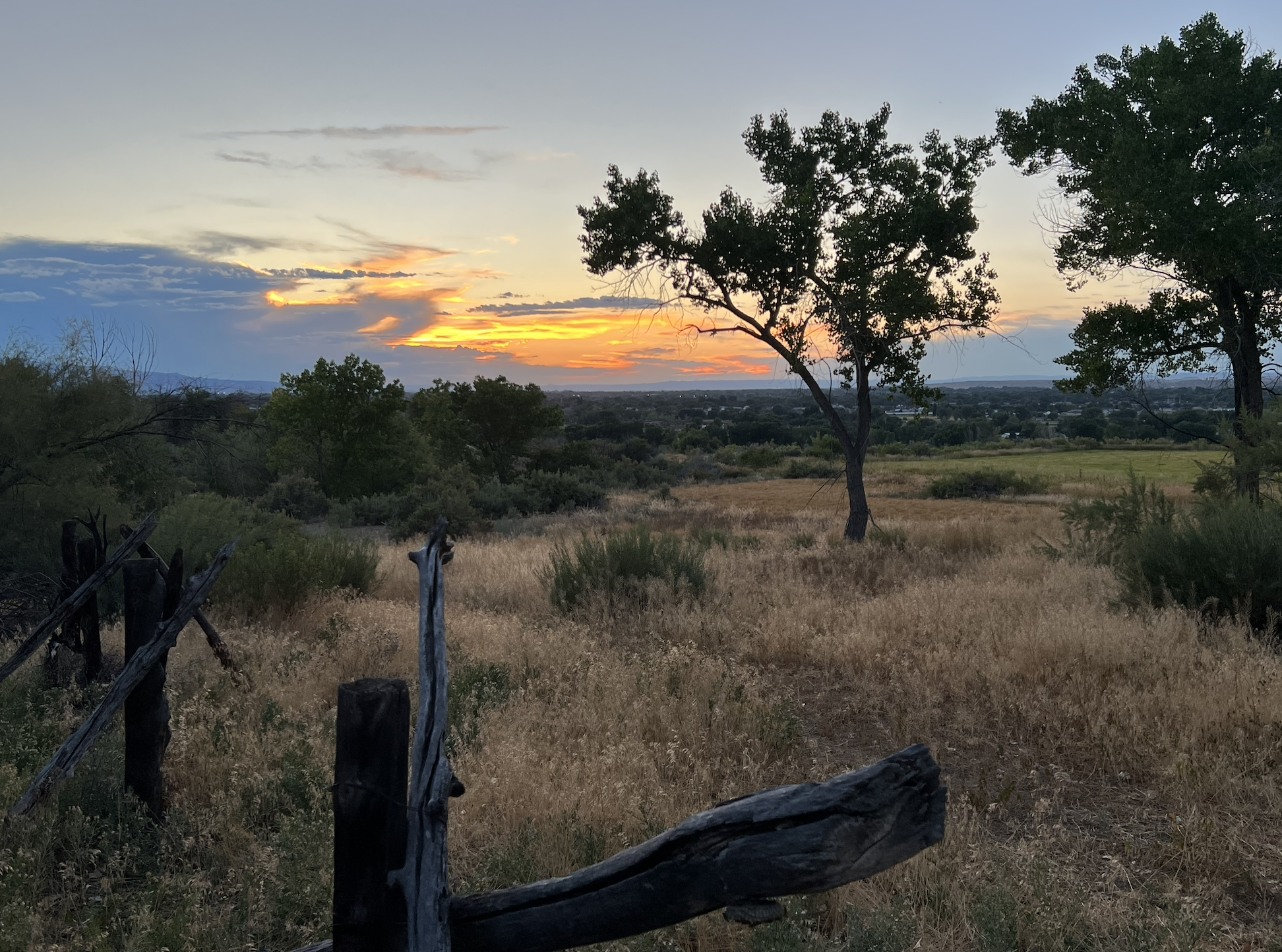
The picture above is one that I took last year, near Wellington. I was enjoying the distant horizon and the time with my then 18 year-old son. From the book, the proverb is:

He taru kahika.

Walk on,
as it is only the summer rain falling.

It’s a reminder to be aware of small adversity, and thus not to let it be a hindrance.

Questions & Answers — A Short Tribute to Harrison Owen

Harrison Owen is as much a founder as anyone of the process methodology, Open Space Technology. I’ve met Harrison once in person. I mostly see his posts on the Open Space list-serve, and have read his books. Two of the things that I appreciate about Harrison are his commitment to simplicity and his commitment to self-organization. As for simplicity, the Harrison voice I often hear on my shoulder is, “what’s one more thing you could not do?” It’s an invocation, often needed, to help the group take responsibility for itself. As for self-organzation, the voice I hear is about how “self-organization has always happened, and is always happening.” Harrison has a “no fooling, let’s not kid ourselves” realism to him.

In my facilitation, I often use Open Space Technology. I count on it to get people working together. Quickly and simply. I count on it as one of the ways that groups can embody and tangibly experience a cultural shift to work together by choice, not by obligation. It inspires.

On today’s Open Space list was a post from Harrison. It’s on answers and questions. I very much relate to the questions that matter, and was having a form of this conversation last night with my 19 year-old. I was telling him how I appreciate questions (inquiry) more than I appreciate answers (many of which are imposed certainty, for convenience).

Here’s his post — thanks Harrison.
c

It is all about answers.
The critical thing in life.
So I was told.

If you do not have the answers,
Or better THE ANSWER,
Life is hardly worth living.

Poor me —
No matter how hard I tried, 
Every answer I found
Was either partial, 
half-assed or stupid. 
Answers don’t help a bit.
It’s the Question, Stupid!
Not just any question. 
The Question. The biggie. The one with no possible answer.

Sitting THAT Question makes anything possible.
Nothing is certain.

It is called real open space. 

Breathtaking!
Who Are We, The Voters — An Exploration of Shadow

Alan Briskin is, among other things, one of the authors of The Power of Collective Wisdom. He’s a person whose thinking I enjoy. I periodically check in to his writings. One of his coauthors, Sheryl Erickson, is someone that I was in contact with quite a bit, way back in the 90s.

This morning Alan shared an email about a series on collective shadow that he’ll be blogging about. An excerpt from that is below. I like his thinking on the angle of descent in to that shadow.

Finally, I want to offer a reframe for the meaning of descent. It can refer to a movement downward, even a sudden violent attack. It can also refer to origins, such as the background of a person’s family or nationality. All these meanings show up in my writing, but it is the angle of descent that concerns me. If the descent is too extreme, meaning unconscious, it can indeed result in a violent end. However, if the descent allows us to penetrate into the depths of our situation, and we return with greater consciousness, then we will be able to see our situation with new eyes and contribute to our world with new understanding. This is the journey we are all on, managing the boundary between conscious and unconscious awareness. Let it be a joyful one, opening the soul’s eyes, embracing multiple perspectives, and joining the company of those we most value and respect.

What really caught my attention from Alan’s email was his quote from NY Times Columnist, Thomas Friedman, reflecting on American presidential politics as gateway to exploring Shadow. “What interests me most right now, though, is a different question. It’s not, “Who are they – our politicians?” It’s, “Who are we – the voters?

Now we are getting somewhere, right?


Emergence — It Takes A Commitment

I’m enjoying writing this week, inspired in part by my friend and colleague (frolleague) Kinde Nebeker. We’ve been thinking together about emergence. Putting words to it. Getting to the heart of it. Growing our understanding. Understanding and working with emergence is a key part of the series we are offering again this fall in Salt Lake City, The Inner and Outer of Evolutionary Leadership.

Here’s a teaser from the three-page thought paper I wrote. The full piece is here.

In the 1990s I was part of several leadership conferences offered in the beautiful Wasatch Mountains at Sundance Utah, where there are a lot of Aspens. Sundance is the resort that Robert Redford built and was original host to the Sundance Film Festival. Those conferences were on “Self-Organizing Systems,” lead by my friends (and bosses at the time) Margaret Wheatley and Myron Rogers. They were three-day gatherings with up to sixty people who wanted to learn of this self-organizing paradigm. Some were consultants. Some were internal leadership. Some were community leaders. Some were C-level in corporations. It was a beautiful place to learn, and that brought out the beauty of those people together.

One of the guest presenters at those conferences was Fritjof Capra, the Austrian Physicist, renowned for his writings (including The Tao of Physics, The Turning Point) and his work at Berkeley’s Center for Ecoliteracy. Fritjof, like Meg and Myron, like many of us that have continued this work, was studying the qualities of living systems, including emergence, and applying those learnings and principles to human systems — teams, organizations, communities. 

I remember Fritjof describing an example of sugar in one of his teachings — though he seemed to be thinking it out loud and coming up with the example in the moment. “Sugar is a mix of three elements: carbon, hydrogen, and oxygen, none of which are sweet.” He continued, “the sweetness,” he paused to peer out into that beautiful forested Sundance setting, “is in, the relationship. It is not in the parts.” In making that statement, his peering outside came back to those of us inside. He’d made a discovery, which got a good chuckle from all of us — in the way that in-the-moment simplicity does.

Gifts of Circle - Question Cardsasd
Gifts of Circle is 30 short essays divided into 4 sections: 1) Circle's Bigger Purpose, 2) Circle's Practice, 3) Circle's First Requirements, and 4) Circle's Possibility for Men. From the Introduction: "Circle is what I turn to in the most comprehensive stories I know -- the stories of human beings trying to be kind and aware together, trying to make a difference in varied causes for which we need to go well together. Circle is also what I turn to in the most immediate needs that live right in front of me and in front of most of us -- sharing dreams and difficulties, exploring conflicts and coherences. Circle is what I turn to. Circle is what turns us to each other."

Question Cards is an accompanying tool to Gifts of Circle. Each card (34) offers a quote from the corresponding chapter in the book, followed by sample questions to grow your Circle hosting skills and to create connection, courage, and compassionate action among groups you host in Circle.

This will close in 60 seconds

asd
In My Nature
is a collection of 10 poems. From A Note of Beginning: "This collection of poems arises from the many conversations I've been having about nature. Nature as guide. Nature as wild. Nature as organized. I remain a human being that so appreciates a curious nature in people. That so appreciates questions that pick fruit from inner being, that gather insights and intuitions to a basket, and then brings the to table to be enjoyed and shared over the next week."

This set of Note Cards (8 cards + envelopes)  quotes a few favorite passages from poems in In My Nature. I offer them as inspiration. And leave room for you to write personal notes.

This will close in 60 seconds

asd
Most Mornings is a collection of 37 poems. I loved writing them. From the introduction: "This collection of poems comes from some of my sense-making that so often happens in the morning, nurtured by overnight sleep. The poems sample practices. They sample learnings. They sample insights and discoveries. They sample dilemmas and concerns."

This set of Note Cards (8 cards + envelopes)  quotes a few favorite passages from poems in Most Mornings. I offer them as inspiration. And leave room for you to write personal notes.

This will close in 60 seconds